


Seafarers stranded due to a strict Iranian blockade
Seafarers in the Persian Gulf are becoming increasingly distressed as the Iranian blockade of the Strait of Hormuz continues. Food and water are now being rationed on hundreds of ships, while uncertainty about supplies, relief and evacuation is growing by the day. As a result, what first appeared to be mainly a geopolitical crisis is taking an increasingly clear human toll.
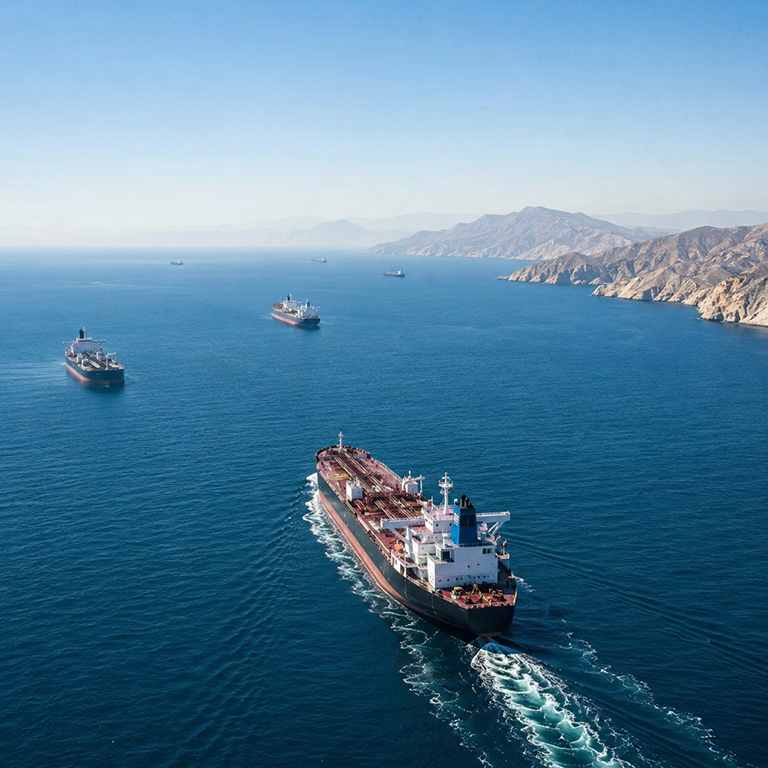
According to the United Nations International Maritime Organisation (IMO), some 20,000 crew members are trapped on some 3,200 ships in the area. This puts pressure not only on global trade, but especially on the people who keep transport running. For many sailors, it is now no longer a question of delay, but of survival under difficult conditions.
Seafarers live at sea with less water and food
An Indian seafarer trapped off the coast of Iraq reported that there is no more drinking water on board and water is now being boiled to make it somewhat safe to drink. Such signs show how quickly a maritime blockade turns into a humanitarian issue. Once supply ships themselves can no longer sail freely, shortages immediately arise on smaller vessels and support ships.
Tension also grows on larger vessels. A captain anchored off Qatar, near the Ras Laffan gas facility, warned that a full port closure would virtually eliminate opportunities to evacuate crews. This makes the situation extra tough for sailors. Not only is the logistics chain stalling, but safety on board is also coming increasingly into focus.
Did you know
Globally, tens of thousands of seafarers at a time can get stuck in a blockade, while supplies often depend on the same routes that are actually closed.
Seafarers on Dutch ships wait for clarity
There are no concrete reports of food or water shortages among Dutch seafarers at the moment. Yet that by no means means means that the situation is reassuring. Trade union Nautilus calls the mental pressure great, precisely because many sailors have been stuck since the start of the war and do not know when they will be able to go home. Being relieved no longer works in many cases, effectively stretching contracts by force majeure.
According to shipowners' organisation KVNR, nearly 100 Dutch ships are stuck in the region, with a total of more than 500 people on board. Among them would be around a hundred Dutch nationals. No immediate shortages have yet been reported there either, but the industry is emphatically anticipating deterioration if the blockade continues for longer.
Nautilus' criticism is sharp. The union argues that shipowners and governments should think faster about scenarios in which crews are actively recalled or better protected. This is not an unnecessary luxury. After all, seafarers are the silent engine of international trade but are often the last on the agenda in a crisis.
For shippers and importers, this development is also a warning sign. When ships remain idle, it affects not only energy flows and tanker traffic, but also confidence in the reliability of routes in the Gulf region. Companies dependent on sea freight would be wise to re-examine their supply chains. Read more about the impact on the sea freight page.
The next few days will be decisive. As long as the Strait of Hormuz is not safe and freely accessible, the position of seafarers will remain vulnerable. The crisis then is not just about geopolitics or oil, but mainly about people at sea waiting for water, food and a route home. More background can be found via the International Maritime Organisation.
Receive our newsletter?
Stay up to date on container volumes, terminal capacity and developments in inland and sea freight. Sign up now: