



What is happening? Six merchant ships have been hijacked by Somali pirates since April; more than 80 crew members are being held.
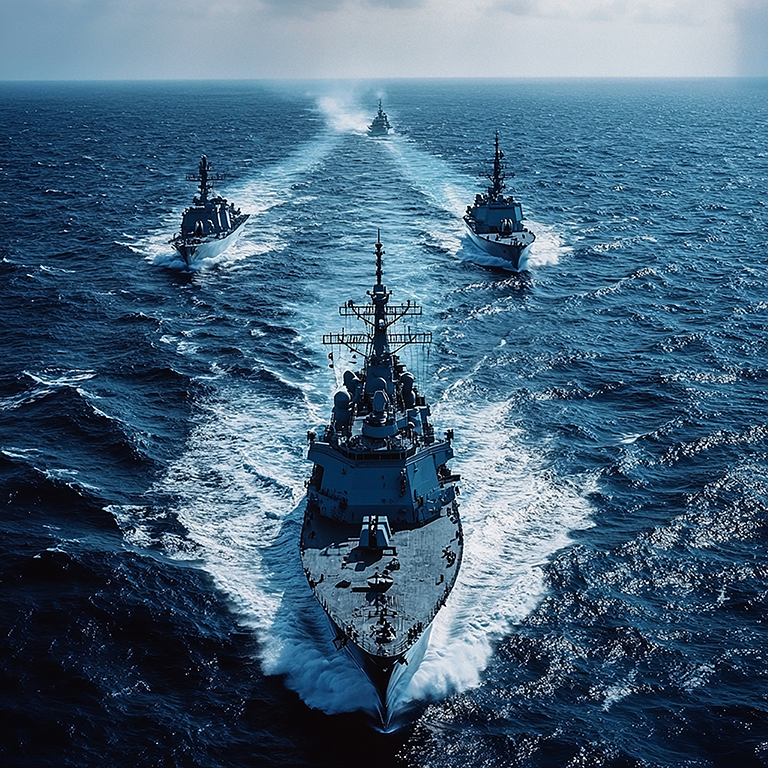
Why now? The war around Iran is pulling naval vessels towards the Middle East, leaving the anti-piracy mission Atalanta short of capacity.
How serious is it? Atalanta has counted some 76 piracy cases since November 2023 — well below the 2009-2011 crisis level, but the threat to crews is serious.
Six hijackings since April
The series began on 21 April, when the tanker Honour 25 was seized off the northern Somali coast. Five days later the Sward, a cargo ship loaded with cement, followed near Garacad. Events then moved quickly: the Eureka off the coast of Yemen, the Asana some 65 nautical miles southwest of Al Mukalla, and on 17 August the Lutuf, just a few nautical miles off the coast near Mareeyo.
Naval mission Atalanta has also confirmed a sixth hijacking, but is withholding the name of that vessel for now. According to analyst John Walker of EOS Risk Management, Somali piracy never disappeared. Growing instability in the region and the scope for illegal activity have, in his view, made the risk of piracy considerably greater.
For carriers and shippers this means renewed risk on an already vulnerable trade lane. More information on current market developments is available on the ocean freight rates page.
Naval forces shift towards the Middle East
The shift of maritime resources towards the Middle East is significant, though not extreme, according to Walker. Even so, the war is creating visible problems: Atalanta has too few naval ships for a sea area of this size, while part of the warships present are focused on the confrontation between the United States and Iran rather than on fighting piracy.
A worrying trend is emerging, particularly in the western Gulf of Aden and off the coast of Yemen: hijacked dhows — Arab sailing vessels and fishing boats — are being used as motherships for pirate attacks further out at sea. According to Walker, this was still relatively rare last year.
Atalanta confirms that the Iranian dhow Al Waseemi 786 was hijacked in March and was presumably used for this purpose. The threat level on the route to Mombasa is also rated moderate to substantial, especially close to the coast. Read more about ocean freight and importing.
Not yet a crisis like 2009-2011
How serious is the situation in historical perspective? Walker estimates that at the peak of Somali piracy, between 2009 and 2011, at least 124 merchant vessels were successfully seized. Since November 2023, Atalanta has recorded a total of 76 piracy cases — well below that level.
Security firm Castor Vali nonetheless considers the threat serious enough to warrant continued vigilance. This is not a crisis like the one back then, but the combination of fewer naval ships, new attack tactics and persistent instability means the situation could deteriorate quickly.
The logistics behind the hijackings are striking: captured ships near Garacad are resupplied via a land route of some 140 kilometres from Galkayo. Behind the pirates, moreover, sits a network of local players supplying boats, fuel, negotiators and financiers.
| Vessel | Type / cargo | Location / date |
|---|---|---|
| Honour 25 | Tanker | Northern Somali coast, 21 April |
| Sward | Cargo ship carrying cement | Near Garacad, late April |
| Eureka | Merchant vessel | Off the coast of Yemen |
| Asana | Merchant vessel | ±65 nm southwest of Al Mukalla |
| Lutuf | Merchant vessel | ±4 nm off Mareeyo, 17 August |
| Sixth vessel | Name not yet released | Confirmed by Atalanta |
Sources and methodology: reporting by De Telegraaf (24 August 2026), based on the EU naval mission Atalanta, analyst John Walker (EOS Risk Management) and security firm Castor Vali. Historical comparison: at least 124 successful hijackings in 2009-2011 versus 76 recorded piracy cases since November 2023.
A human drama on board
Behind the numbers lies a human drama that receives little attention. Hostage situations drag on for months, families are often left without information, and contact with the crews is limited. On board, food and clean drinking water are scarce.
A crew member of the Honour 25 made an urgent appeal for help in a video message. The reality stands in stark contrast to the image painted by Hollywood films such as Captain Phillips from 2013: no spectacular rescue operation, but months of waiting while coastal surveillance remains inadequate.
As long as the criminal networks behind the piracy persist and poverty along the Somali coast remains widespread, the pirates are simply waiting for their next chance. Even relatives of pirates voice criticism, while acknowledging that many fishermen see few alternatives.
Implications for importers and exporters
For international shipping, the resurgence of piracy adds risk to a trade lane already under pressure from the situation in the Red Sea. Carriers may opt for diversions via the Cape of Good Hope, additional security or higher insurance premiums. Those costs ultimately feed through into freight rates and surcharges.
For businesses shipping containers, planning ahead pays off: request rates in good time, compare routes and transit times, and factor in surcharges for high-risk areas. Clear agreements on Incoterms, insurance and documentation also help avoid surprises.
TOP closely follows developments around piracy, shipping routes and ocean freight rates. Read more about requesting a rate, Incoterms and container handling.
The way risk analysts and naval missions increasingly rely on data and digital monitoring shows how important smart data applications have become — well beyond logistics. Want to know more about AI, SEO, marketing and web development? Visit HEF Digital.
...pirates use hijacked dhows and fishing boats as floating bases? With such a mothership they can operate hundreds of nautical miles offshore, far beyond the reach of regular coastal surveillance.