



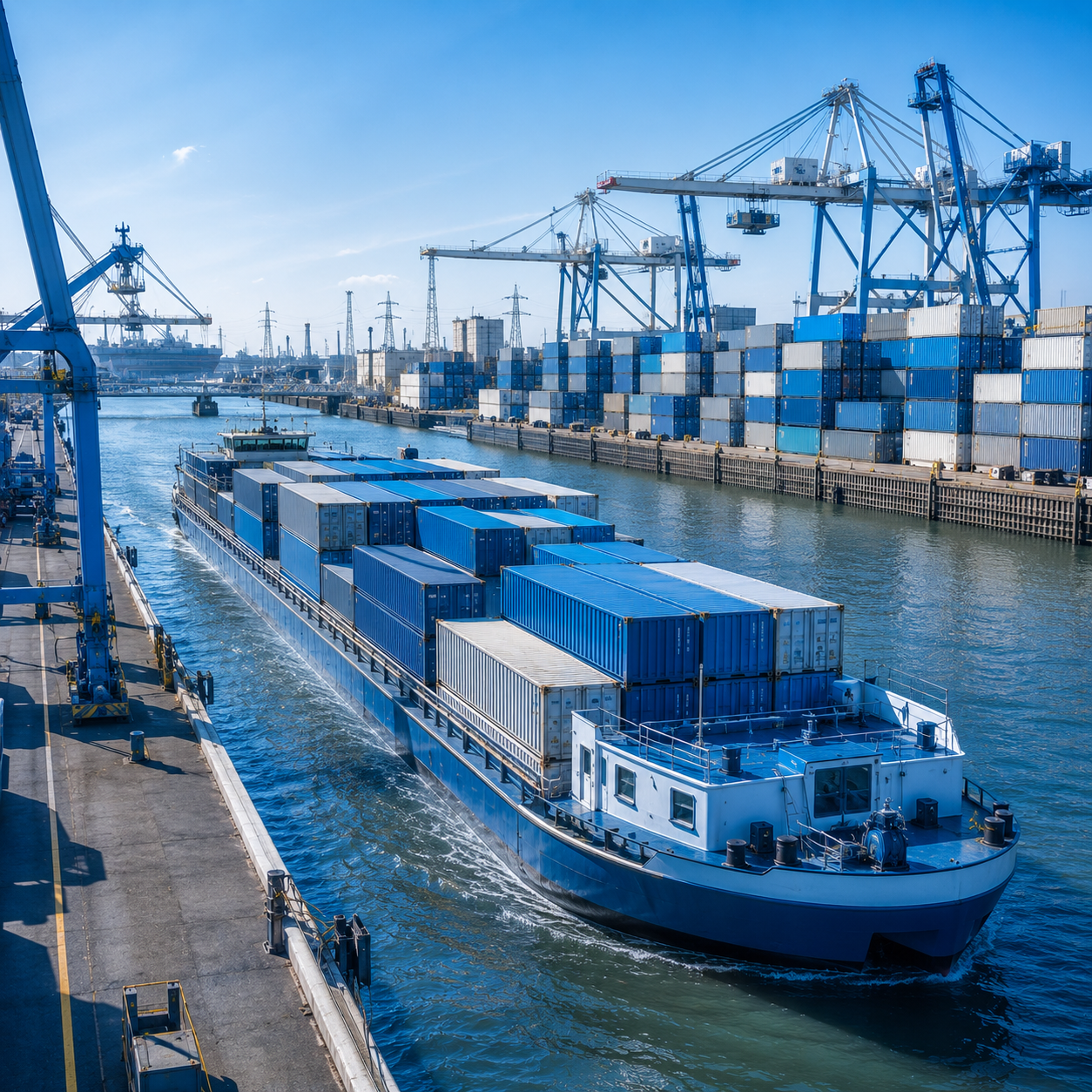
German inland waterway sector calls for the Rhine to be modernised
TOP MAGAZINE · Barge
German inland waterway transport companies and port authorities are sounding the alarm over infrastructure shortages and an ageing fleet on the Rhine. They are calling for substantial investment and are accelerating modernisation efforts to safeguard future freight flows.
Call for investment in the Rhine
The Rhine and the West German canal network are the backbone of German inland waterway transport and crucial for industrial supply chains. According to the recently formed Allianz Wasserstraße, comprising leading inland waterway transport companies and ports, many locks, weirs and hydraulic structures are operating at full capacity or in need of major maintenance. The alliance is calling for a long-term investment programme of at least 2.5 billion euros per year for infrastructure on federal waterways.
The sector is also strongly advocating for faster procedures regarding planning and implementation, so that improvements to the Rhine system can be realised more quickly.
Climate and capacity call for a future-proof fleet
In addition to infrastructure, the ageing fleet is a particular cause for concern. German inland waterway transport companies point out that low water levels are becoming more frequent and could seriously disrupt supplies to industry. For this reason, the sector wants the government to encourage the purchase of modern, shallow-draft and energy-efficient vessels.
A European target has been set: up to 1,000 new, future-proof vessels by 2035, of which around 350 will be in Germany. From 2027, an investment fund of 400 million euros per year is proposed for the replacement and sustainability upgrade of the fleet, including adaptations for alternative fuels and the circular economy.
Shippers must take the transition into account
According to the sector, the greening and modernisation of the Rhine’s infrastructure will not only enhance the river’s reliability as a logistics corridor, but is also necessary to respond to changing freight flows, such as waste, energy carriers and semi-finished products.
Companies are being warned: modern, climate-resilient transport is only possible if both waterways and the shipping fleet keep pace with technological and economic developments.
What does this mean for your shipment?
TOP’s interpretation based on the above developments.
Planning
Shippers should take into account possible delays due to renovation and modernisation projects on the Rhine, but can expect greater predictability of sailing times in the long term.
Costs
During the refurbishment, the cost per tonne may rise, as older vessels are less operational and investment costs are passed on. In the long term, streamlined infrastructure and a modern fleet may once again deliver efficiency benefits.
Point to note
Keep a close eye on whether projects for new locks, vessels and sustainability measures are actually being implemented, so that logistical alternatives can be planned in good time in the event of disruptions.
Sources
Flows — German inland waterway companies call for locks on the Rhine
Image: TOP archive, for illustrative purposes.