


Hapag ships stuck, Iran toll option not ruled out
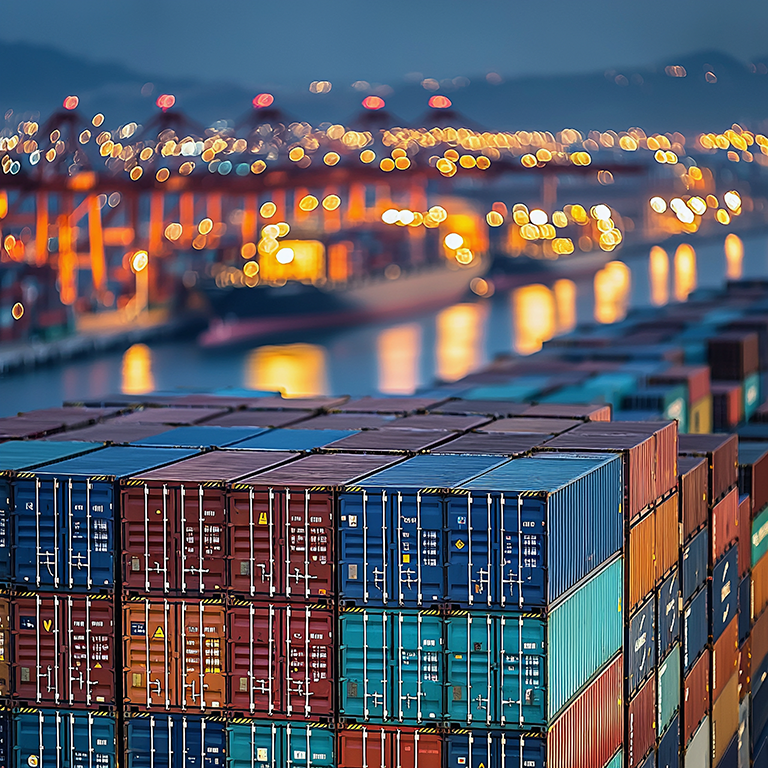
Hapag ships are at the centre of a complex search for a way out of the Persian Gulf. German shipping company Hapag-Lloyd is trying to get its six container ships currently tied up safely away. This even includes considering the possibility of paying a toll to Iran, although crew safety remains the absolute priority.
CEO Rolf Habben Jansen indicated at a press conference that no solution has yet been found. The crew of the Hapag ships are doing well under the circumstances and have sufficient food, water and medicine. Nevertheless, the situation remains uncertain and tense, while pressure is mounting at headquarters to force a breakthrough.
Hapag ships possibly via toll through Strait of Hormuz
The option of paying a toll to Iran is being seriously considered. According to reports, the Iranian Revolutionary Guards would allow ships to pass through the Strait of Hormuz via a 'safe corridor', provided a fee of around $2 million is paid. Hapag-Lloyd does not rule out this route, but stresses that no unacceptable risks will be taken.
The situation is complicated by the lack of clarity on who in Iran actually makes the decisions. In addition, tolls are not an officially internationally recognised measure, which adds legal and operational complexity. For shipping companies, this means that every decision must be carefully weighed.
Did you know?
The Strait of Hormuz is one of the busiest maritime routes in the world, so any disruption directly affects global container flows.
Hapag ships cause millions in losses every week
The impact on Hapag-Lloyd is significant. Due to the downtime of the six Hapag ships and rising costs in the region, the additional bill rises to $40-50 million per week. This is due to higher fuel costs, insurance, storage and extra transport via alternative routes.
According to Habben Jansen, this is not a situation that can be sustained for a long time. Therefore, the shipping company is in talks with customers to partially share these costs. As with rising fuel prices in everyday life, higher costs will eventually be passed on in transport rates.
Despite these challenges, the shipping company remains relatively optimistic about the outlook. Hapag-Lloyd stands by previous forecasts and expects the situation in the Middle East to be temporary. At the same time, it remains uncertain what the ultimate impact on container transport demand will be.
Hapag ships seek alternative routes via land
To still keep logistics going, Hapag-Lloyd has developed alternative solutions. For instance, containers are transported via land transport through the desert to the port of Jeddah. From there, they are still further transported towards Asia and other destinations via new services.
However, this solution is of limited use. The capacity of trucks and infrastructure in the region is insufficient to handle full shiploads. As a result, it remains a temporary solution, especially suitable for urgent shipments.
For the wider logistics sector, the situation underlines how vulnerable global supply chains are to geopolitical tensions. You can read more about how international transport flows are organised on the sea freight page.
The next few weeks will determine the future of Hapag ships in the region. Whether paying tolls will actually become the way out depends on political developments, security considerations and the willingness of shipping companies to take this extraordinary step.