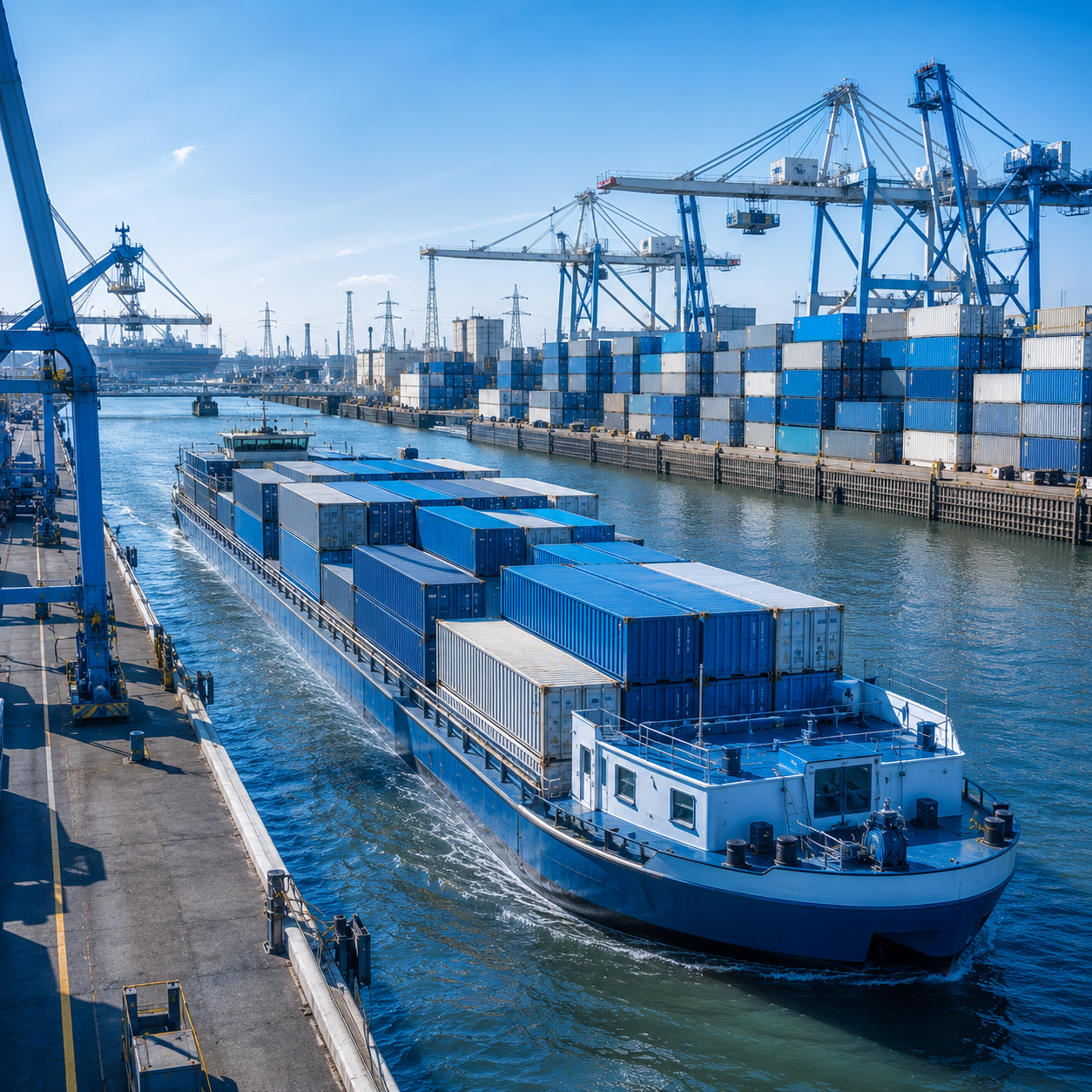




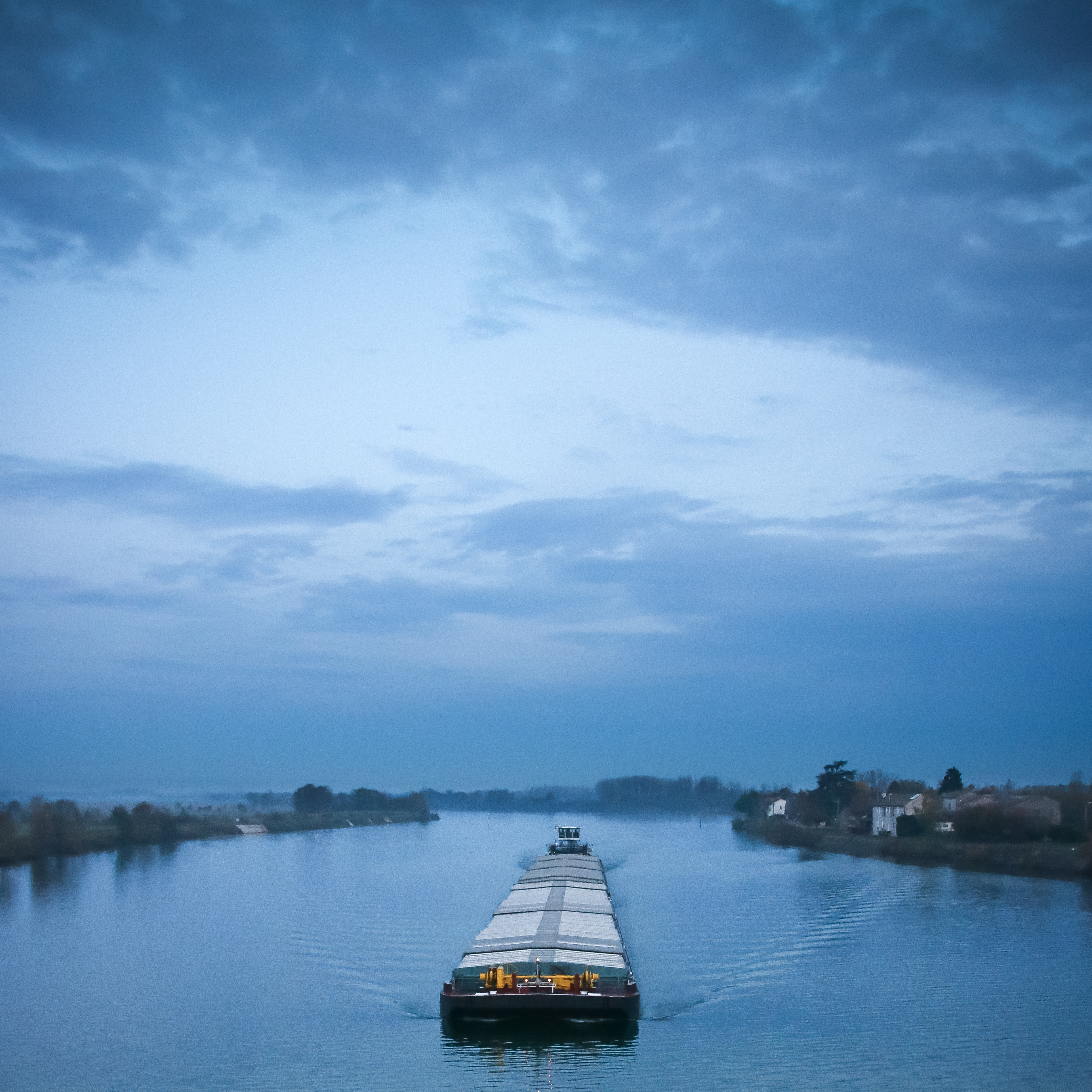
Inland waterway transport on the Rhine is coming under increasing pressure due to extremely low water levels. Container barge operator Contargo warns that sailing on parts of the Rhine will soon no longer be economically viable.
Water levels at several measuring points have already fallen below critical thresholds. Forecasts predict a further drop in the coming days. This threatens to lead to temporary suspensions of regular inland waterway services to key German hinterland regions.
Inland waterway transport on the Rhine reaches a critical threshold
The Rhine is one of Europe’s most important logistics corridors. Containers, bulk goods, building materials, chemical products and industrial cargo are transported via the river between seaports and the European hinterland. When water levels become too low, inland vessels can carry significantly less cargo.
According to Contargo, the water level at Emmerich is 18 centimetres, at Duisburg-Ruhrort 171 centimetres, at Cologne 83 centimetres and at Kaub 36 centimetres. This means that all the measuring points mentioned are below the contractual thresholds at which the transport obligation ceases.
For companies that rely on inland waterway transport, this means that transport planning becomes uncertain. Vessels can still sail, but at a much lower capacity than normal. As a result, costs per container rise and the reliability of fixed sailing schedules decreases. Further information on combined solutions can be found on the multimodal transport page.
Water levels set to fall further towards the end of July
The situation is expected to deteriorate further. According to forecasts, by 30 July 2026, water levels could fall to 8 centimetres at Emmerich, 164 centimetres at Duisburg-Ruhrort, 71 centimetres at Cologne and 23 centimetres at Kaub.
Kaub, in particular, is a key measuring point for Rhine shipping heading towards southern Germany. When water levels there are extremely low, the loading capacity of vessels is severely restricted. Contargo states that inland waterway transport is no longer possible at Kaub once levels fall below 25 centimetres.
This drop could have major consequences for container flows between Rotterdam, Antwerp, Germany and Switzerland. Reduced load capacity means more transport movements, higher rates and a greater risk of delays in the hinterland supply chain.
Contargo warns of temporary suspension
Contargo warns that, should the forecasts prove accurate, regular inland waterway services to and from the Upper Rhine, Middle Rhine and Rhine-Main regions may be temporarily suspended. According to the operator, inland vessels will then only be able to utilise a very limited portion of their regular cargo capacity.
Beyond a certain point, reliable and economically viable transport by inland vessel can no longer be guaranteed. This means that far-reaching operational measures may follow in the short term. For shippers, this could result in altered routes, alternative modes of transport or longer transit times.
This sends a clear signal to the international logistics sector. Inland waterway transport is efficient and sustainable for large volumes, but prolonged drought makes this mode of transport vulnerable. Companies must then switch quickly to rail, road or a combination of solutions.
Rail and road as temporary alternatives
Contargo recommends that, in the affected regions, containers should predominantly be transported by rail or lorry if water levels fall further. This can improve the continuity of transport, but does require additional capacity and planning.
A rapid switch to other modes of transport is not always straightforward. Rail capacity is limited, and lorries are dependent on drivers, available vehicles, road congestion and loading times. Furthermore, costs may rise if many shippers require the same alternatives at the same time.
It is therefore advisable for companies to discuss shipments in good time. For critical deliveries, it may be necessary to reassess departure dates, transport modes, destinations and stock planning. Read more about container handling, sea freight and requesting quotes.
Low-water surcharges are rising sharply
Where transport by ship is still possible, low-water surcharges apply. Under current circumstances, according to Contargo, these can amount to up to 180 euros per 20-foot container for Emmerich, up to 335 euros for the Duisburg-Ruhrort region and up to 320 euros for the Cologne region.
These surcharges compensate for the reduced loading capacity of vessels. An inland vessel that can normally carry a large number of containers has to sail with a reduced load during low water. This increases the cost per unit and means operators have to deploy more capacity for the same volume.
For importers and exporters, this means that total logistics costs may turn out to be higher than expected. It is not just sea freight or terminal costs that are taken into account, but also hinterland costs, surcharges, additional transhipment and any modal shift to rail or road.
Consequences for shippers and freight forwarders
For shippers and freight forwarders, the low water levels on the Rhine create immediate uncertainty. Shipments to the Upper Rhine, Middle Rhine and Rhine-Main regions may be delayed or have to be transported via alternative routes.
For companies with fixed delivery windows, this can create additional pressure. Production lines, construction projects, distribution centres and wholesalers often rely on predictable supplies. If containers do not arrive on time, this can affect planning, stock levels and customer commitments.
TOP is closely monitoring developments relating to inland waterway transport, low water levels and hinterland connections. It remains important for customers to adapt promptly, keep their options open and take into account possible surcharges or changes to transit times.
Inland waterway transport remains important, but requires flexibility
The situation on the Rhine highlights just how important flexibility is in logistics chains. Inland waterway transport remains a strong mode of transport for large volumes, but is dependent on sufficient water depth. In the event of extremely low water levels, contractual agreements, sailing schedules and cost levels can change rapidly.
Companies that make regular use of inland waterway transport would be well advised to have contingency plans in place. These might include alternative terminals, additional stock, rail solutions, the temporary use of lorries or amended agreements with customers.
During prolonged droughts, reliable logistics is not about a single mode of transport, but about the right combination of options. This is precisely where the value of multimodal planning and good communication between the shipper, freight forwarder, terminal and carrier lies.
…during low water, it is not the length of a vessel but, above all, its draught that is the determining factor? The lower the water level, the less cargo an inland vessel can carry safely and economically.
Related news

Would you like to receive our newsletter?
Stay up to date with inland waterway transport, low water levels, Rhine transport and international logistics developments. Sign up now: