


The Rhine has reached a new low in Germany, according to the German Inland Waterways Agency (WSV). The navigable water depth at Kaub, near Koblenz, was just 11 centimetres on Wednesday. As a result, cargo ships risk running aground and north-south river traffic at this point has effectively ground to a halt.
The consequences are immediately felt throughout the entire logistics chain. Ships are operating at a fraction of their capacity, cargoes have to be spread across several vessels, and industrial customers are warning of higher costs. Meanwhile, Germany and the transport sector are urgently seeking alternatives via rail and road.
Rhine near Kaub virtually unnavigable
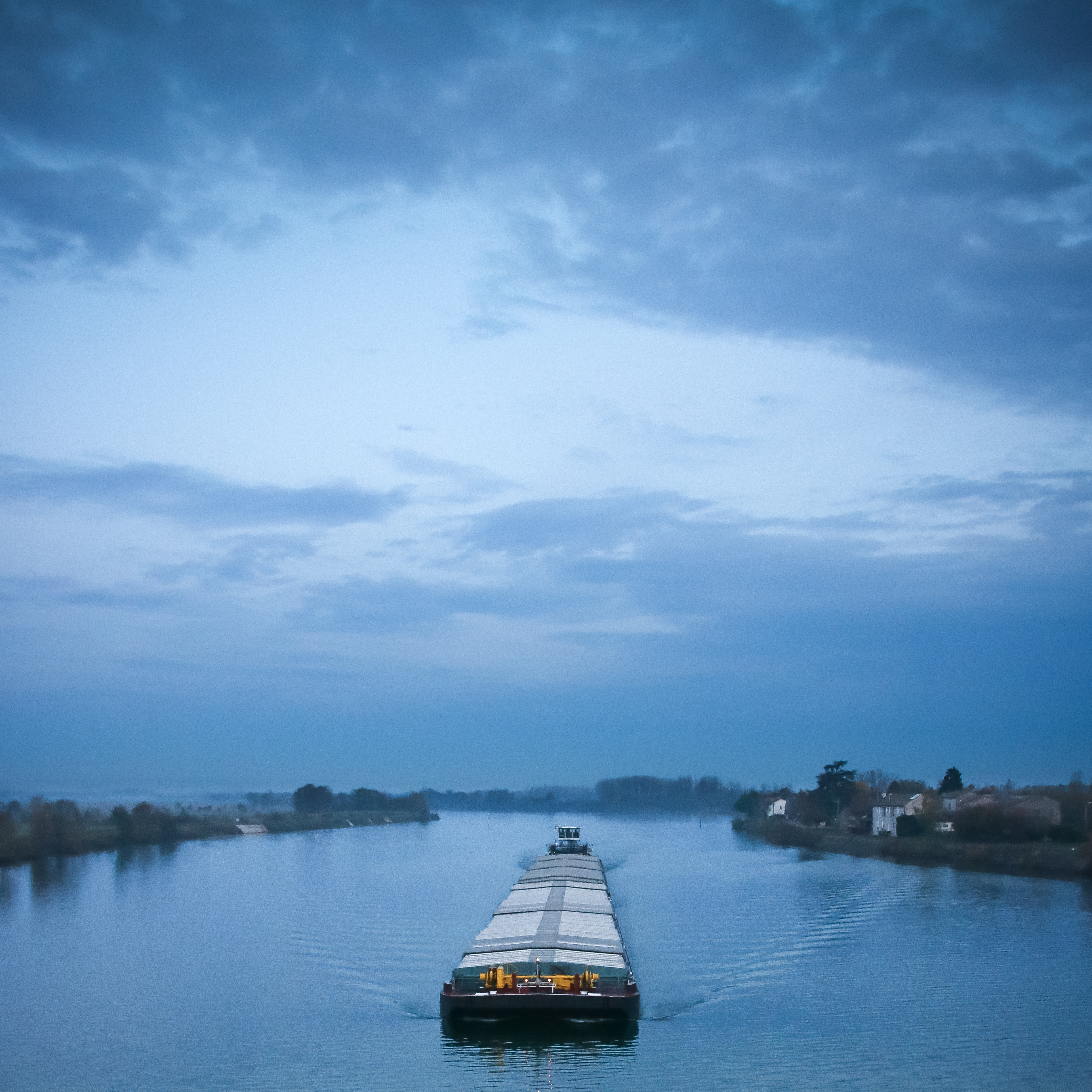
The inland waterway agency WSV reported that the navigable water depth at Kaub stood at 11 centimetres on Wednesday. Kaub, south of Koblenz, is one of the shallowest and most critical bottlenecks on the Middle Rhine. Anyone wishing to sail from the Dutch seaports to southern Germany or Switzerland must pass this point.
Consequently, most vessels are unable to sail north or south past Kaub. According to a local commodities trader, north-south river traffic has effectively ground to a halt at this point. In practice, this divides the Rhine into two separate navigable sections: a northern section towards the Netherlands and a southern section towards Mannheim, Karlsruhe and Basel.
This has direct consequences for transport flows to and from the port of Rotterdam. Transport by barge towards southern Germany is currently almost impossible to plan without having alternatives to fall back on.
What exactly does 11 centimetres of navigable water depth mean?
Important to note: the navigable water depth is not the same as the water level of the Rhine at that point. There is still approximately one metre of water below the measured value. The 11 centimetres is a reference value indicating how much clearance ships have above the critical minimum.
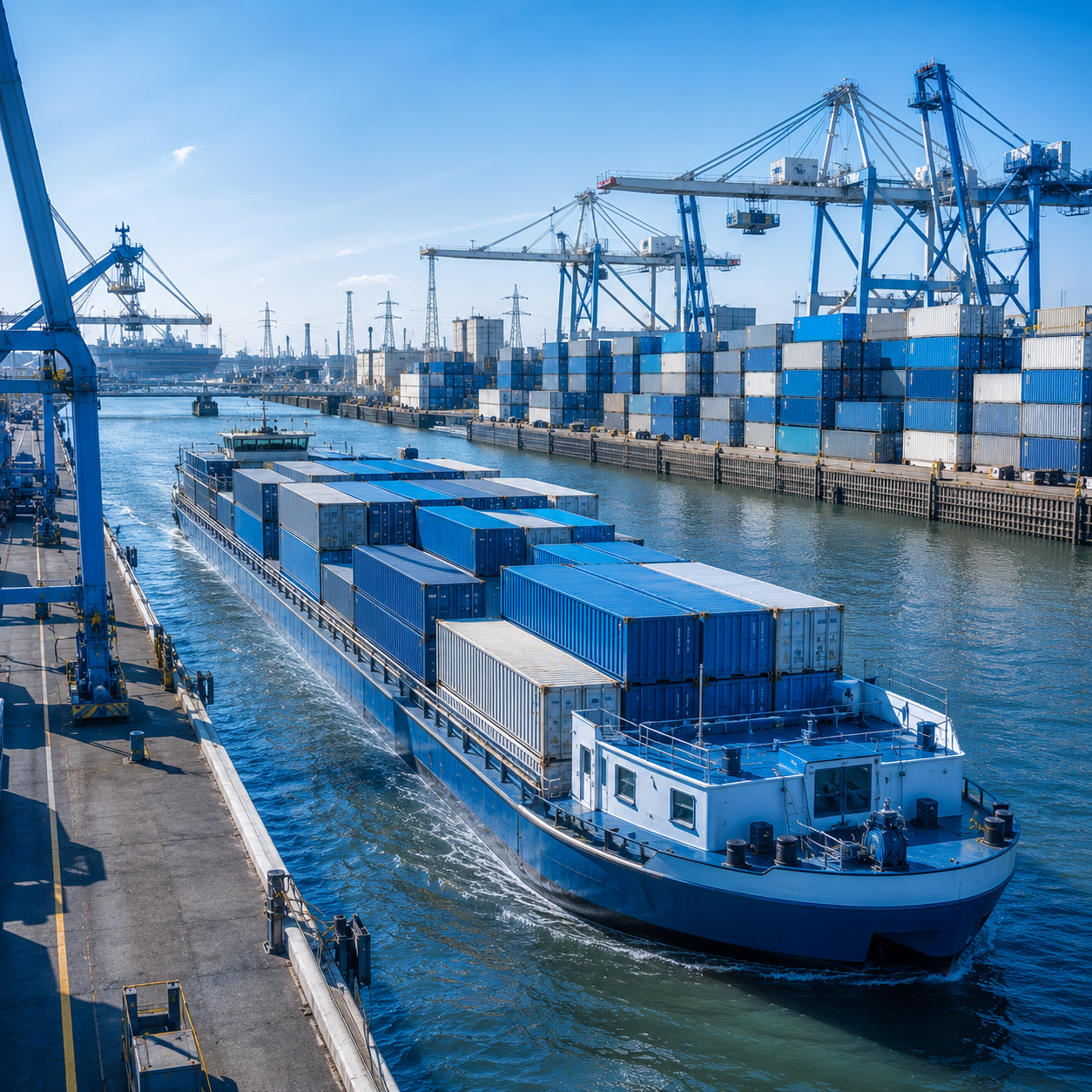
In practice, such a low water level means that ships must drastically reduce their draught. Any ship carrying too heavy a load will run aground in shallow water. According to several sources, some ships are currently sailing at just 20 per cent of their capacity.
This not only slows down transport on the Rhine, but above all makes it more expensive. After all, moving the same amount of cargo requires many more ship movements, whilst the available fleet cannot simply be expanded. As a result, low-water surcharges are rising rapidly.
Industry warns of higher costs
Chemical producers, utility companies, steel producers and agricultural traders, amongst others, are warning of higher costs. Cargoes must be spread across several vessels to prevent them from running aground in shallow water. Every additional vessel movement means extra costs that ultimately feed through the supply chain.
Industrial areas along the Upper Rhine, in particular, are heavily reliant on waterborne transport. Raw materials such as coal, ores, chemicals and grain are difficult to transport in large volumes by road. Replacing a single inland vessel can easily require dozens of lorries.
For companies that import goods via Rotterdam and transport them on to the German hinterland, it is therefore important to reassess transport costs and delivery times. Would you like to know more about the options? Visit the import page.
Deutsche Bahn is deploying extra freight trains
The German railway company Deutsche Bahn is attempting to alleviate the freight problems caused by low water levels in the Rhine by offering more freight transport by rail. Its subsidiary, DB Cargo, could mobilise 400 additional freight wagons in the short term, according to CEO Bernhard Osburg during a meeting at the German Ministry of Transport.
According to the DPA news agency, the CEO said at the meeting that a single freight train can replace up to ten inland waterway vessels thanks to its longer transit time. Naturally, rail cannot fully replace inland waterway transport, but it does offer a viable alternative for certain cargo flows.
It is already worthwhile for shippers to consider rail transport or a smart intermodal combination of water, rail and road. This ensures that freight keeps moving, even when conditions on the Rhine are unfavourable.
Sunday driving ban for lorries lifted
Germany has been trying for some time to find solutions to ease the pressure on waterways. Several German federal states have recently lifted the Sunday driving ban for lorries to allow for more road transport.
This creates extra flexibility for time-critical shipments. Containers and general cargo can be shifted to road transport relatively easily, although the sudden surge in demand is also putting pressure on capacity and rates there.
For shipments that cannot wait, road transport is currently often the fastest alternative to southern Germany. However, it is important to book well in advance, as demand for lorries is clearly increasing due to the low water levels in the Rhine.
Consequences for Rotterdam and the hinterland
The consequences of the low water levels on the Rhine are also being felt in the Netherlands. Inland waterway vessels travelling to and from the Port of Rotterdam are operating at a significantly lower load factor, meaning more vessel movements are required to handle the same volume. Container transport to terminals in the hinterland is taking longer and becoming more expensive.
For importers, this means longer lead times and potentially additional costs for container handling. Those who have planned their stock levels tightly would be wise to build in buffers and review delivery schedules whilst the low water levels persist.
Digitalisation helps with this. Real-time insight into water levels, transit times and available capacity makes the difference between reacting and planning ahead. Companies that make smart use of their logistics data and online visibility – for example, with AI solutions and web development from specialists such as HEF Digital – can adapt more quickly when the market shifts.
What can importers and shippers do now?
As long as the Rhine remains at such a low level, the situation will continue to change from day to day. Rain in the catchment area could bring relief, but there is little prospect of this in the short term. Companies would therefore be well advised not to wait and see, but to actively review their transport mix.
This includes spreading cargo across multiple modes of transport, ordering critical goods earlier, and keeping a close eye on low-water surcharges in quotations. Clear agreements on delivery terms also help to avoid surprises. Read more about Incoterms.
TOP is closely monitoring developments on the Rhine, water levels, surcharges and alternative routes. Our specialists are happy to advise you on the best combination of barge, rail and road transport for your shipments. Would you like to know what this means for your transport? Request a quote.
…a single inland vessel on the Rhine can carry as much cargo as dozens of lorries? That is why even a small drop in the water level at Kaub has an immediate impact on transport costs, capacity and delivery times across the whole of north-western Europe.