


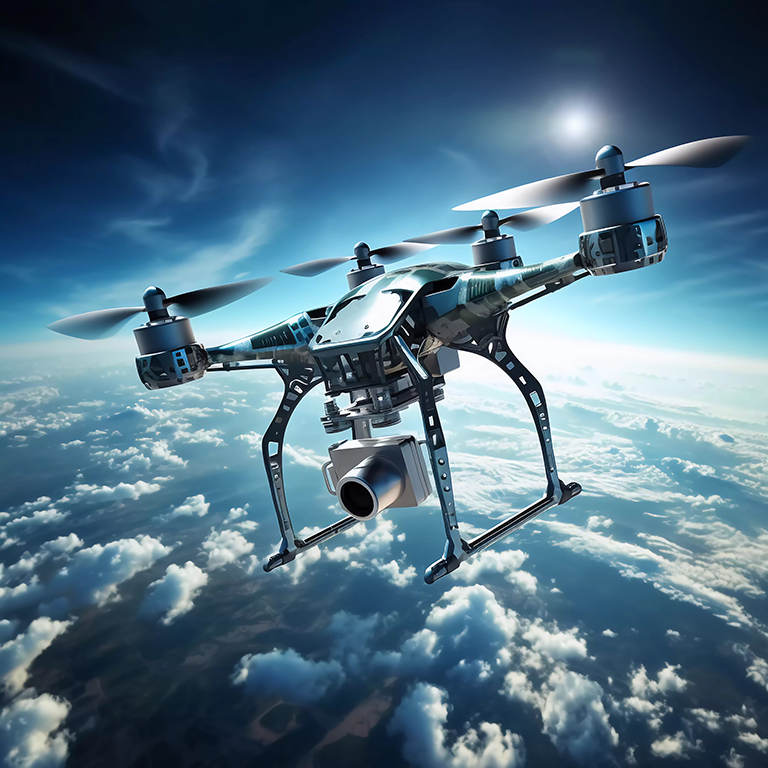
The Port of Rotterdam is seeing an increasing amount of drone traffic. The Port of Rotterdam Authority therefore wishes to establish a regulated airspace above the port area, so that professional drone flights can be safely coordinated.
To this end, the Port Authority has submitted an application for what is known as a ‘Pre-U-space’ airspace. This marks the start of the formal process towards a system designed to better organise the low-altitude airspace above the port.
Drone traffic in the Port of Rotterdam is growing rapidly
Drones are already being used in the Port of Rotterdam for inspections, security, environmental monitoring and incident response. According to the Port of Rotterdam Authority, the number of drone companies has quadrupled in just a few years and is expected to rise further.
This growth necessitates new arrangements. Whilst shipping, road traffic and rail traffic are already tightly organised, there is now also a need for clear rules, supervision and coordination above the port. Low-altitude airspace is becoming busier and is being used in a more professional manner.
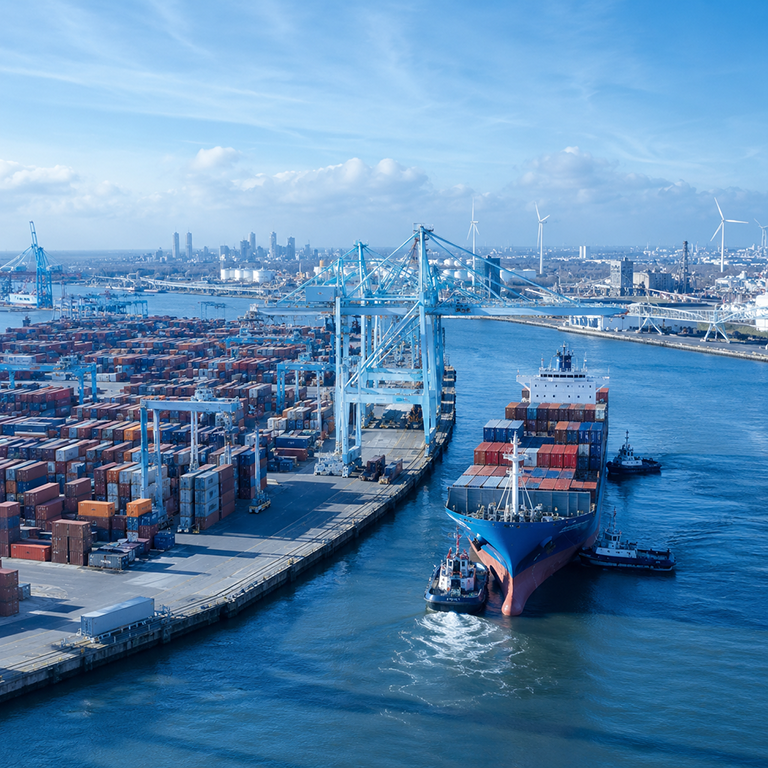
This is particularly important for a complex port area such as Rotterdam. Drones fly over terminals, tanks, quays, ships, infrastructure and industrial sites. Safe use therefore requires close coordination with businesses, site managers, emergency services and authorities. Further information on the port’s logistical role can be found on the sea freight page.
Pre-U-space to lay the foundations for air traffic control
The Port of Rotterdam Authority has submitted an application for a Pre-U-space airspace to the Air Traffic Management Board. This is the policy unit of the Ministries of Infrastructure and Water Management and Defence that assesses applications for changes to Dutch airspace.
Pre U-space is the first phase towards a fully regulated low-altitude airspace. The aim is to organise drone flights in a step-by-step manner, with rules governing registration, clearance, authorisation and coordination. In the long term, the aim is to establish a system comparable to the organisation of road, rail and maritime traffic.
According to the Port of Rotterdam Authority, U-space should help to make the growing volume of drone traffic safe, manageable and resilient. As a result, the airspace above the port will become a new layer within the logistics infrastructure.
Minister Karremans given a demonstration at the port
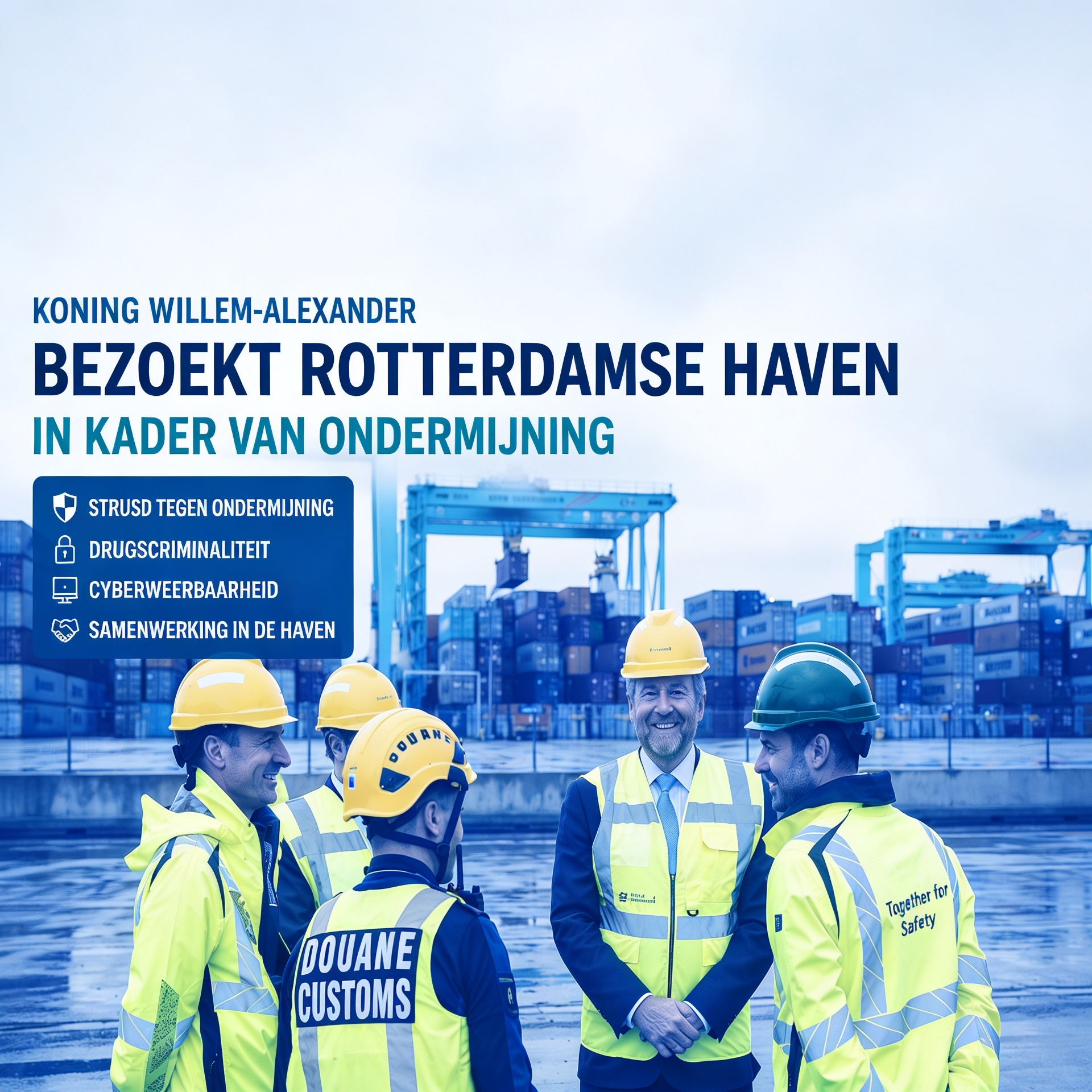
The application was announced during a working visit by Vincent Karremans, Minister for Infrastructure and Water Management, to the Port of Rotterdam Authority. The visit focused on the use of drones and the future of unmanned aviation in the port.
The minister was shown how companies in the Port of Rotterdam use drones for operational tasks. A demonstration was also given of the U-space Airspace Centre, a system that enables drone flights to be coordinated.
For the port, this represents more than just technological innovation. Drones can make inspections faster, safer and cheaper. Examples include checks on quays, cranes, installations, storage tanks, ships and hard-to-reach locations. In this way, drones can contribute to safety, maintenance and continuity in port operations.
Better detection of unknown drones
A key component of the new system is the detection of unknown drones. In Rotterdam and other ports, there is growing concern about drones flying over critical infrastructure without authorisation or with malicious intent.
The global security situation is heightening these concerns. Drones can be used for inspections and surveillance, but in the wrong hands they can also be used for sabotage, espionage or the disruption of operational processes. In a port with energy infrastructure, terminals, chemical clusters and shipping, monitoring low-altitude airspace is therefore becoming increasingly important.
By improving the registration and coordination of drone flights, it becomes easier to distinguish between known, authorised flights and unknown objects. This helps port operators, security teams and the authorities to respond more quickly in the event of anomalies.
Drone traffic is becoming part of port logistics
The growth in drone traffic demonstrates that the Port of Rotterdam is becoming increasingly digital and smart. Whereas for many years logistics revolved primarily around ships, lorries, trains and inland waterway transport, a new dimension is now being added: unmanned aerial traffic.
This can bring benefits for businesses. Drones can gather information more quickly, inspect damage, support environmental checks and provide an immediate overview in the event of incidents. As a result, decisions can be made more quickly and safety at terminals and industrial sites can be improved.
At the same time, this development calls for clear regulations. Without coordination, heavy drone traffic could actually pose risks. Consider collisions, disruption to emergency services, privacy issues or flights over sensitive locations. A regulated airspace must limit these risks.
Implications for businesses in the Port of Rotterdam
For businesses in the Port of Rotterdam, the introduction of Pre U-space means that drone flights are likely to be organised in a more formalised manner. Businesses that use drones or engage drone operators will have to deal with registration, authorisation, conditions and, potentially, digital coordination of flights.
This requires preparation. Terminal operators, logistics service providers, inspection firms and security organisations need to know which rules apply, where flights are permitted and how flights are coordinated with other activities in the port area.
For international logistics, the core principles remain the same: safety, reliability and predictability. Whether it concerns shipping, customs, container handling or drone traffic, effective coordination strengthens the supply chain. Read more about container handling, customs and IT solutions.
Port of Rotterdam aims to lead the way
With its application for Pre U-space, Rotterdam aims to lead the way in the organisation of professional drone traffic. The port is one of the busiest and most complex logistics areas in Europe. That is precisely why it is a logical place to gain experience with regulated low-altitude airspace.
If the system works well, it could also prove valuable for other ports, industrial estates and logistics hubs. The combination of digital coordination, safety regulations and operational practice could become a blueprint for how drones are integrated into busy areas.
For the Port of Rotterdam, this forms part of a broader trend in which digitalisation, safety and innovation are becoming increasingly important. Drones are no longer just an experiment, but a growing part of day-to-day port operations.
…U-space is a European framework for the digital and automated coordination of drone flights? The system is designed to help drones fly safely in areas where heavy traffic and critical infrastructure converge.