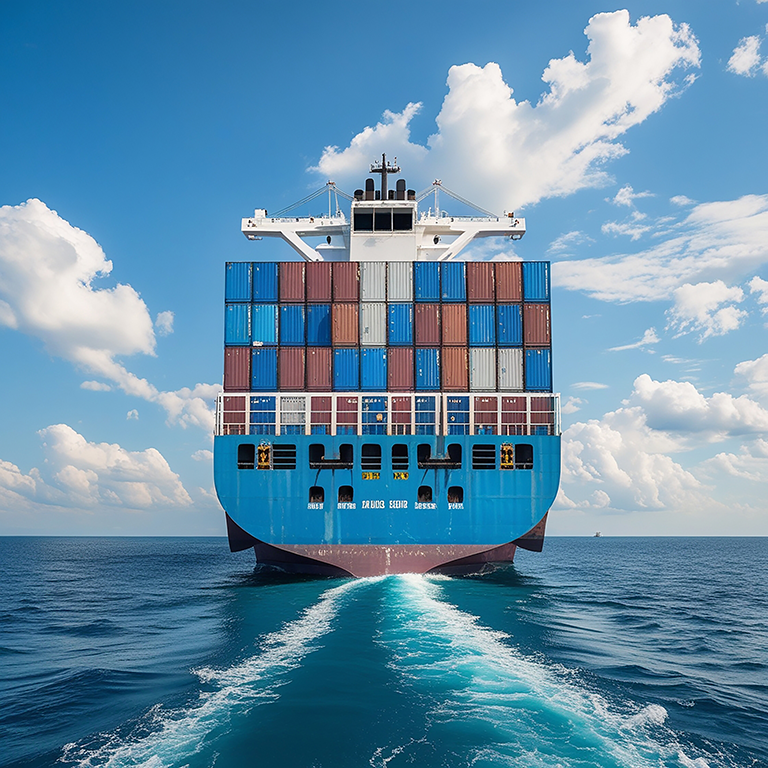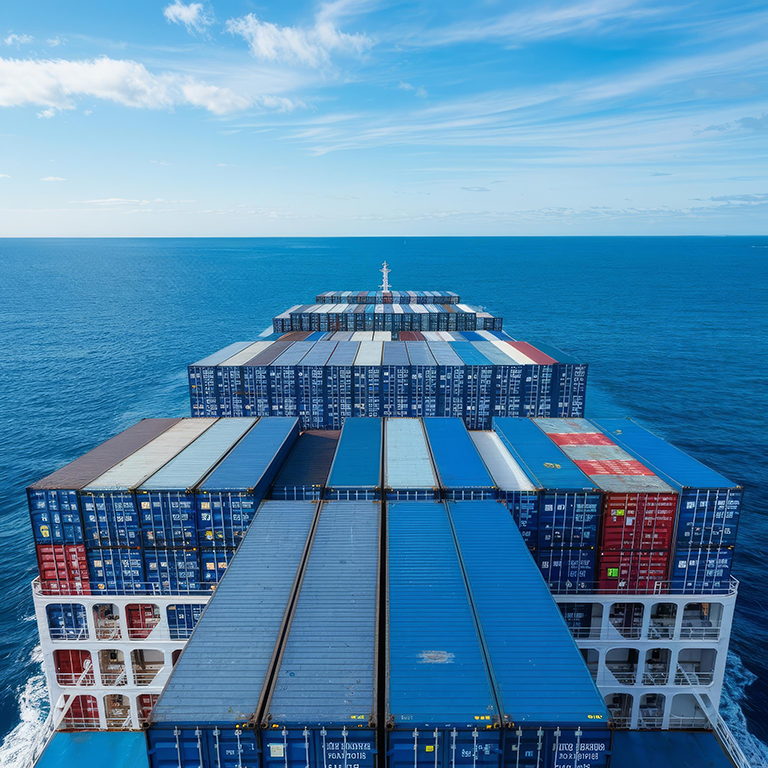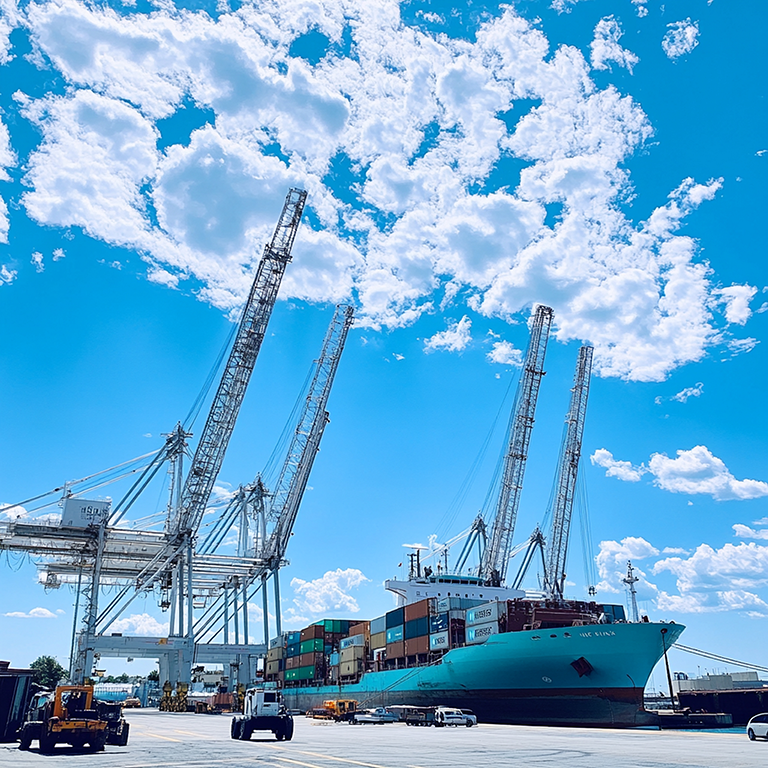





This year, Sea Legend is launching its first weekly China–Europe container service via the Arctic route. This marks a shift from one-off trial voyages to a scheduled commercial service.
The Chinese shipping company is operating the so-called Arctic Express Line between Ningbo and Northern Europe. Felixstowe will serve as the main European hub. Connections to other European ports, including Rotterdam, are offered by Sea Legend as optional services.
Sea Legend launches regular service via the Arctic
The first sailing is scheduled for mid-August from the Chinese port of Ningbo. The container ship Dubai Tower, with a capacity of 1,740 TEU, is due to arrive in Felixstowe on 5 September. This will make the British container port the central European hub for the new service.
A total of eight sailings are scheduled. The final sailing will depart from Ningbo again in early October on the Dubai Tower. The season will then come to an end, as the Arctic route still experiences too much ice in winter for regular container shipping.
This is a significant step for the container shipping industry. Whereas in previous years the route was mainly used for one-off trial sailings, Sea Legend is now committing to a regular scheduled service. Further information on international sea freight can be found on the sea freight page.
Arctic Express Line comprises several vessels
The largest vessel in the Arctic Express Line is the Istanbul Bridge, with a capacity of 4,890 TEU. That vessel already made a one-off voyage via the North Pole to Europe last year, calling at Rotterdam on that occasion.
Following that voyage, it became clear that Sea Legend saw further potential in the route. A regular service in the following season was therefore to be expected. This year, that step is becoming a reality with a series of scheduled sailings between China and Europe.
In addition to the Dubai Tower and the Istanbul Bridge, the Riyadh Mukaab, Athens Odeon and the sister ships Tiger Maanshan, Tiger Bintulu and Tiger Lianyungang are also mentioned as vessels for the service.
Arctic route promises shorter transit time
Sea Legend is marketing the Arctic crossing as a faster alternative to sailing via the Suez Canal or the Cape of Good Hope. The shipping company estimates a crossing time of around twenty days between China and Europe.
This time saving makes the route attractive for certain cargo flows. Think of goods where speed is important, but for which air freight is too expensive. At the same time, the route is highly seasonal and dependent on ice conditions, weather, escort vessels and geopolitical circumstances.
For importers and exporters, this means that the Arctic route is not a standard solution, but may well be an additional option in a market where shipping routes are increasingly under pressure. Read more about importing, exporting and multimodal transport.
Rotterdam takes a critical view of Arctic shipping
Environmental organisations are critical of the increase in shipping through the Arctic. The route passes through a vulnerable area, where incidents, emissions, black carbon and disruption to ecosystems are of particular concern. The route’s dependence on ice conditions also makes it risky.
The Port of Rotterdam Authority has previously stated that it is taking a critical and cautious view of ships travelling to Europe via the Arctic. This is driven not only by environmental concerns but also by geopolitical factors. Russian President Vladimir Putin, in particular, is an outspoken advocate of the Northern Sea Route.
This creates a tension for European ports. A shorter route may be logistically attractive, but it also raises questions about sustainability, safety, sanctions, dependencies and political risks.
Route remains limited to the summer period
This year, the Arctic Express Line will only operate from mid-August to the end of October. This is no coincidence. The Arctic route is still unsuitable for regular container shipping in winter, as there is too much sea ice at that time.
Research into trans-Arctic routes shows that sea ice has a strong seasonal influence. Safe routes mainly emerge in late summer, whilst draught, ice conditions and bathymetry limit their practical usability.
This makes the Arctic route fundamentally different from routes via Suez, the Cape of Good Hope or the Trans-Pacific route. The route may offer temporary advantages, but it is not available all year round and requires precise planning.
South Korea is also testing the Arctic route
Sea Legend is not the only operator looking into the Arctic route. The South Korean shipping company Panstar Line is also setting sail in August for a voyage via the Arctic to Europe, in this case from Busan.
For Panstar, this is currently a one-off pilot project, supported by the South Korean government. The shipping company was selected earlier this year following a tender process and has since designated a 2,700 TEU vessel for the voyage.
The South Korean trial voyage demonstrates that interest in Arctic routes is growing. Nevertheless, there remains a significant difference between a pilot project and a reliable scheduled service. For regular use, seasonal reliability, safety, costs, port access and political stability are key factors.
Implications for European importers
For European importers, the Sea Legend service may be of interest where speed is a priority and the cargo fits within the seasonal window. A shorter transit time can improve stock planning and bring certain products to market more quickly.
On the other hand, the route is still new and its reliability remains to be proven. The optional connection to Rotterdam also requires consideration. If Felixstowe remains the main European hub, additional feeder transport or onward transport may be required to get cargo to the Netherlands or other European destinations.
TOP is closely monitoring developments regarding Sea Legend, the Arctic route and alternative shipping routes. For customers, it remains important to consider not only transit time, but also reliability, route certainty, documentation, costs and the availability of onward transport. More practical information can be found on the pages about container handling, customs and requesting rates.
…the Arctic route is mainly navigable in late summer? In winter, sea ice makes regular container shipping virtually impossible, meaning this route remains seasonal for the time being.