




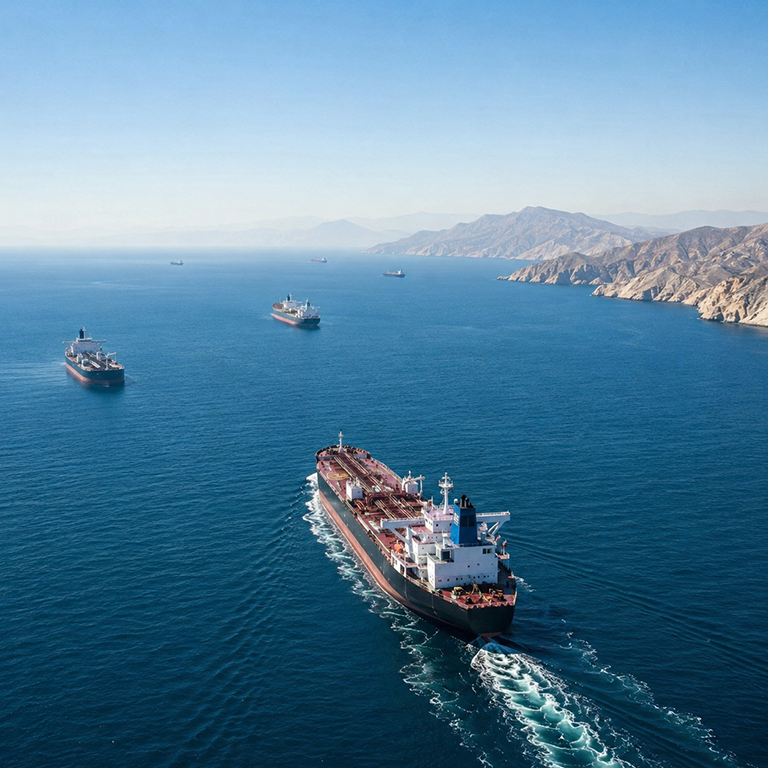
Three tankers struck by mines in the Strait of Hormuz
TOP MAGAZINE · Sea Freight
Three oil tankers have been damaged in the Strait of Hormuz within a short space of time after striking sea mines. The incidents took place in areas where Iran restricts and controls shipping.
Several tankers hit following a series of explosions
According to both Iranian military sources and international reports, three oil tankers have recently been struck by sea mines in the Strait of Hormuz. The Iranian navy and the Revolutionary Guard reported separately that fires broke out on board the vessels. These incidents occurred in the southern part of the waterway, where Iran maintains strict surveillance.
Two of the affected vessels are said to have switched off their identification and navigation systems and passed through the restricted zone without authorisation. One of these tankers is a supertanker and another is carrying liquefied gas. A third vessel was also struck in a so-called unsafe and restricted zone.
Strict controls and military tensions
Since the outbreak of war between Iran and the United States in February, Iran has been strictly monitoring passage through the Strait of Hormuz. Ships are required to seek prior authorisation for passage. In response, the United States has imposed a maritime blockade on Iranian ports and is providing military support to commercial vessels using the strait.
Iran has previously reported several incidents involving sea mines in the area. Video footage released by the Iranian Revolutionary Guard shows plumes of smoke rising from a ship that caught fire after striking a mine.
Impact on maritime freight transport
The Strait of Hormuz is a crucial hub for global oil and gas transport. The recent incidents are causing heightened concern regarding safety and business continuity for shipping companies and shippers. Although the US military claims to have cleared the main shipping lanes of mines, significant risks remain for vessels sailing outside the authorised routes or switching off their transponders.
The names, origins and cargoes of the affected tankers have not been disclosed. Market experts anticipate potential delays and higher operational costs whilst the situation in this strategic strait remains unstable.
What does this mean for your shipment?
TOP’s analysis based on the above developments.
Planning
Carriers should allow for additional checks, detours and waiting times. The heightened military tensions mean that shipping routes may change rapidly.
Costs
The increased risks may result in rising insurance premiums and potential congestion on alternative routes.
Point to note
Vessels that switch off their identification systems or sail without authorisation are at increased risk; it is advisable to take this into account strictly.
Sources
Flows — Three tankers attacked in quick succession in the Strait of Hormuz
Image: TOP archive, for illustrative purposes.