



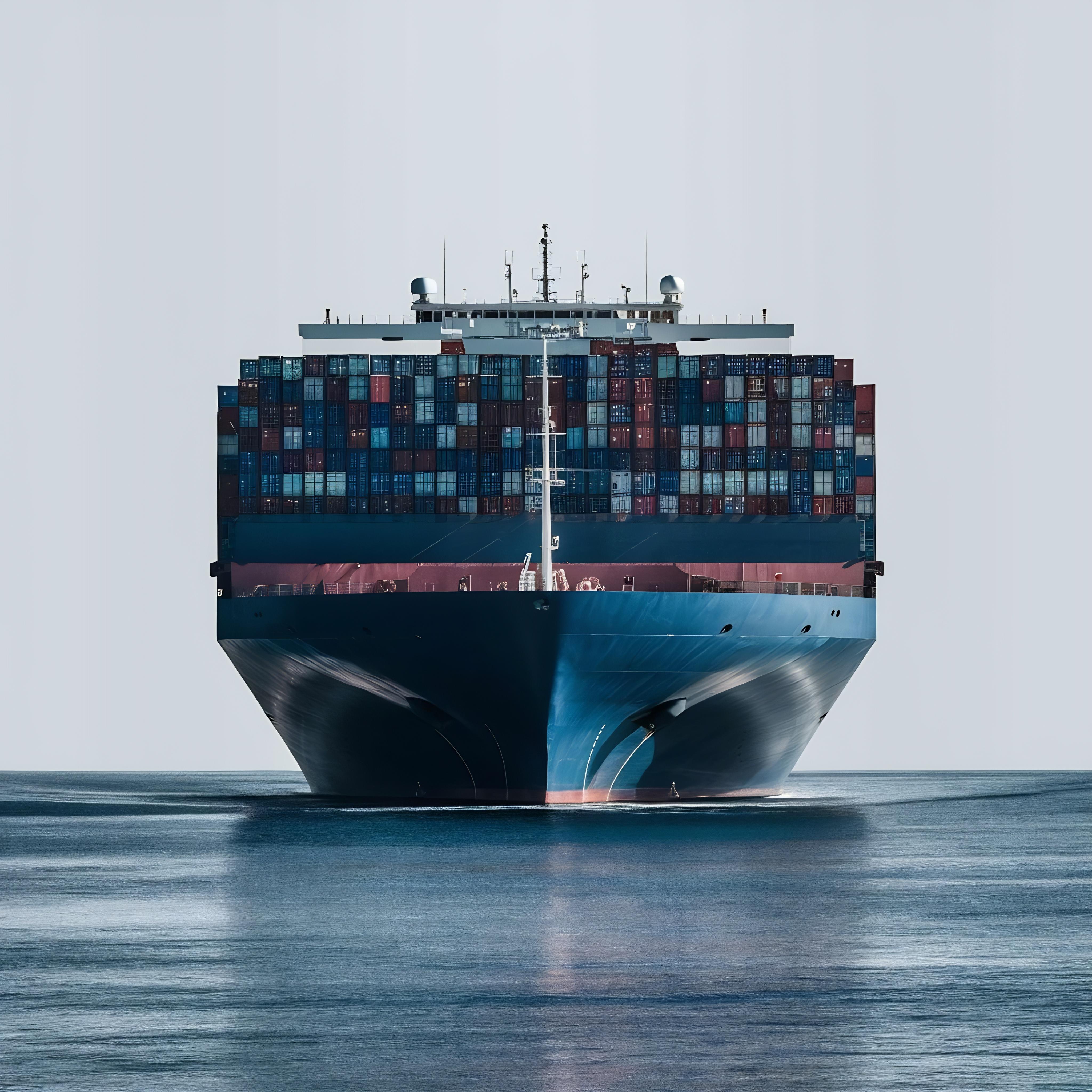
After months of rises, container rates appear to be falling for the first time. Spot rates in the container shipping industry have fallen on key routes from Shanghai.
This suggests that the months-long surge, which began in late April, has reached its peak. Nevertheless, the market remains uncertain. Rates are still considerably higher than they were around this time last year, and the situation in the Middle East continues to affect routes, capacity and surcharges.
Container rates fall on Shanghai–Northern Europe routes
According to the Shanghai Containerised Freight Index, the average spot rate for a 40-foot container from Shanghai to Northern Europe fell by 3 per cent last week. The rate stood at $5,616 per container.
Rates also fell on the Shanghai–US West Coast route. There, the average spot rate dropped by 6 per cent to $6,219 per 40-foot container. The overall SCFI, which takes into account around fifteen international shipping routes, also fell: from 3,326.87 to 3,184.82 points.
This is an important signal for importers and exporters. After weeks of sharp rises, the market appears to be cooling slightly. However, an initial fall does not automatically mean that container rates will quickly return to normal levels. Further information on sea freight rates can be found on the sea freight rates page.
Drewry still sees an increase, but expects stabilisation
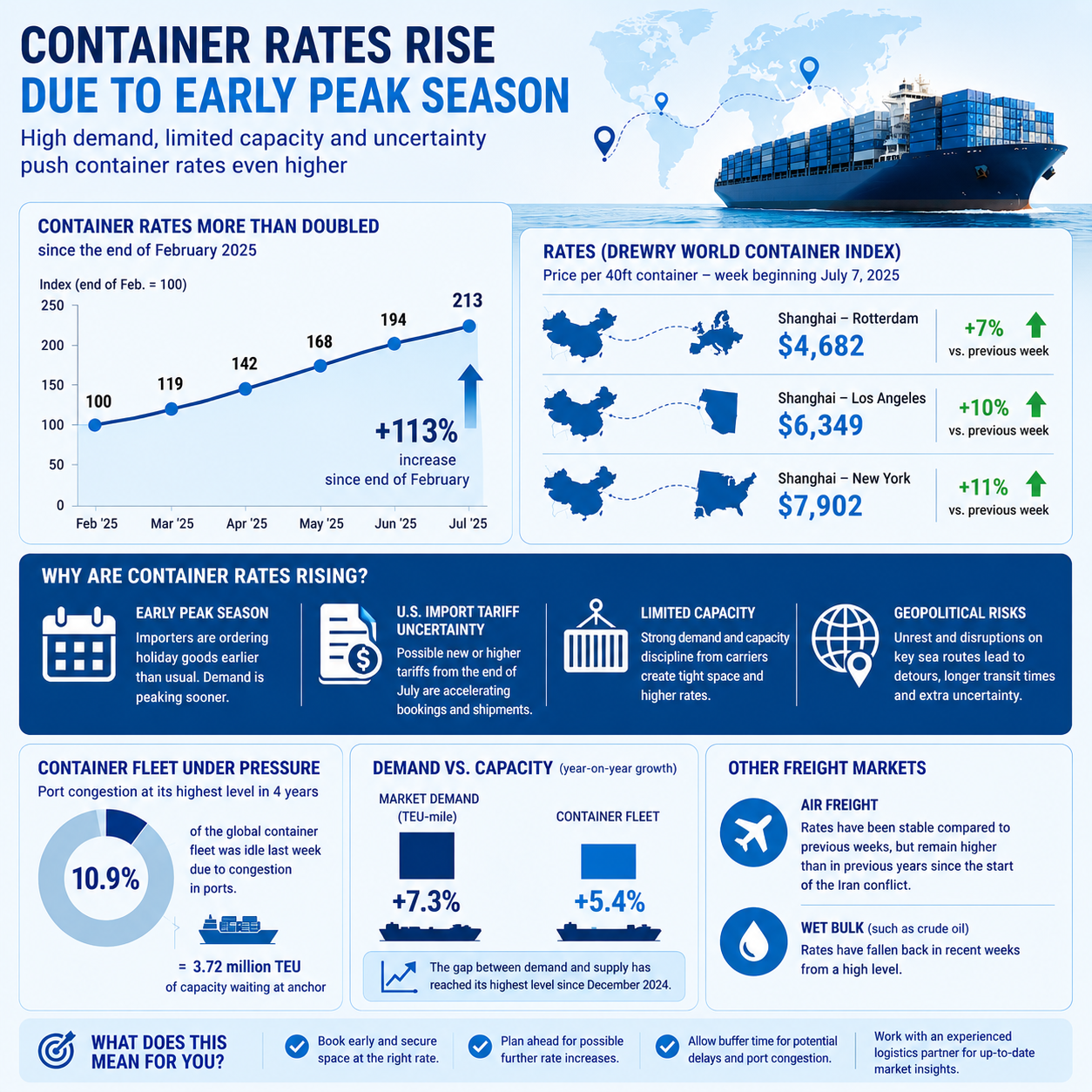
According to Drewry’s World Container Index, the months-long price rise was not yet over last week. In fact, Drewry reported a further rise in the index, with container rates reaching their highest level since September 2024.
However, the tone of the commentary has shifted. Whereas Drewry had previously consistently anticipated further rises, the agency now expects rates to remain firm but stable in the coming weeks. According to Drewry, the east-west container market remains volatile due to the uncertainty in the Middle East.
This distinction is significant for the market. A rising index indicates that the pressure has not yet subsided, but a more stable outlook suggests that the sharpest price rises may now be behind us. For companies booking sea freight, timing therefore remains crucial.
Peak season appears to have peaked
It is beginning to look as though the peak season in container shipping has reached its peak. Drewry expects market demand for container transport to decline from late July through to early August. This is consistent with the view that many importers have made their peak bookings earlier than usual.
This year, the peak season started early. Western importers brought forward their stock-up for the December festive season as early as the spring. That early wave of purchasing lasted longer than usual and put extra pressure on available space, particularly on routes from Asia.
Now that this seasonal demand may gradually ease off, shipping lines may have to make do with a reduced supply of cargo. At the same time, they will seek to maintain revenue through surcharges, capacity management and price discipline.
Container rates remain higher than last year
Although the first signs of a decline are visible, container rates are still significantly higher than at this time last year. Last summer, rates began to fall more rapidly, partly due to fears of increasing overcapacity.
Once again, the balance between supply and demand will determine how freight rates develop. If demand falls and sufficient capacity becomes available, spot rates could come under further pressure. If geopolitical disruptions persist, however, price levels may remain high for longer.
For companies importing from Asia, this means that market information remains crucial. A fall of a few per cent may seem favourable, but rates can vary significantly depending on the route, shipping line, week of departure and time of booking. Read more about importing, container handling and requesting rates.
Overcapacity remains a lingering concern
Fears of overcapacity have not gone away. Container shipping lines have ordered many new vessels in recent years, whilst relatively few older vessels have been scrapped. As a result, available fleet capacity has grown significantly.
Until now, part of that capacity has been absorbed by the longer route via the Cape of Good Hope. Due to the unrest around the Red Sea and the Suez Canal, many shipping lines have diverted their routes, meaning ships have been at sea for longer and have become available for new sailings less quickly.
That effect could disappear if more shipping lines move their services back to the shorter Red Sea–Suez Canal route. Maersk already moved two liner services back to that traditional container route last week. If more carriers follow suit, extra capacity could suddenly become available on the market.
Shipping lines are trying to protect their revenues
When demand falls, shipping lines will try to protect their revenue. They can do this through surcharges, blank sailings, adjusted capacity or stricter price agreements. Drewry expects carriers to try to maintain rates through additional surcharges.
Shippers should bear this in mind when planning. A falling base rate does not always mean that the total cost of a shipment will immediately fall as well. Bunker adjustment factors, peak season surcharges, equipment costs and congestion surcharges can all affect the final amount.
It therefore remains wise to carefully compare quotations in terms of total costs, validity, route, transit time and terms and conditions. Particularly in a volatile market, the difference between a competitive rate and a reliable solution can be significant.
What does this mean for importers?
For importers, the initial fall in container rates is a sign that the market may be turning. Nevertheless, caution remains necessary. Rates are still high, the market remains sensitive to route changes, and geopolitical risks could once again disrupt planning.
Companies would be well advised to discuss bookings in good time, consider alternative departure weeks and take potential surcharges into account. It is also wise to submit complete documentation to ensure that shipments do not suffer unnecessary delays at the cut-off, at customs or during terminal handling.
TOP closely monitors developments in container rates, capacity and sailing schedules. For customers, it remains important to look not only at the spot price, but at the complete logistics solution. More practical information can be found on the pages about sea freight, customs and the Bill of Lading.
…container rates often rise faster than they fall? When demand falls, shipping lines try to protect their revenue through surcharges, capacity management and adjusted sailing schedules.