


Container shipping companies are driving up rates again
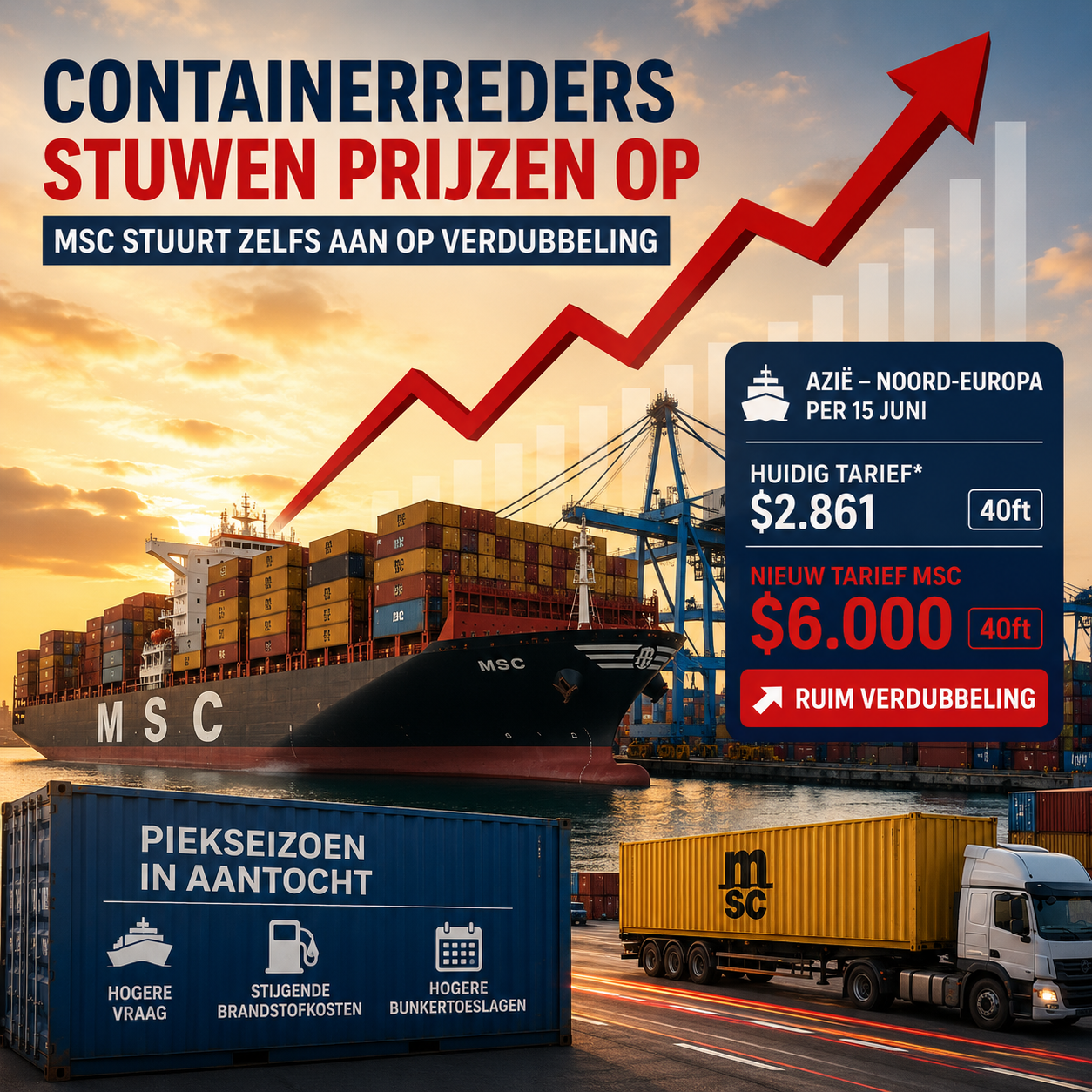
Container shipping companies are once again pushing hard for higher sea freight rates. Market leader MSC intends to significantly increase container rates between Asia and Northern Europe from 15 June and is even aiming to more than double current spot prices. Other container shipping companies such as Maersk, CMA CGM and Hapag-Lloyd are also preparing new rate increases and peak season surcharges.
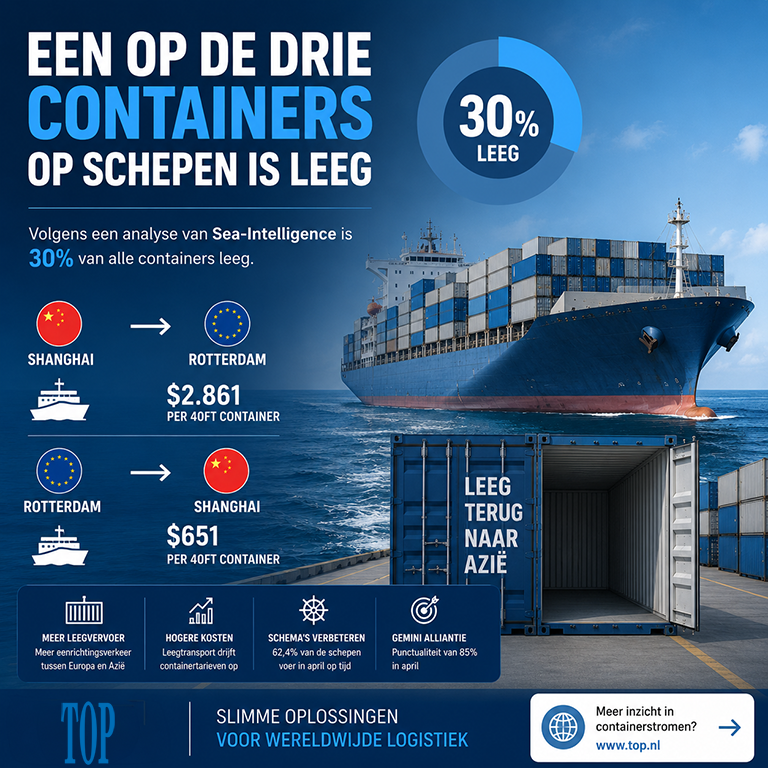
According to a new announcement by MSC, a 40-foot container is set to cost $6,000 on the Asia-Northern Europe route from mid-June. This is significantly higher than the current Shanghai-Rotterdam spot rate of an average of $2,861 per container, as measured by Drewry’s World Container Index.
Container shipping companies anticipate an early peak season
Analysts note that the traditional peak season in container shipping is starting early again this year. Spot rates rose by 15 per cent last week and continue to climb. According to Drewry, container shipping companies expect demand for capacity to pick up further in the coming weeks.
It is not only MSC that is raising its rates. Maersk has also announced new rates for mid-June, whilst CMA CGM is targeting $4,700 per 40-foot container between Asia and Northern Europe from 1 June. Hapag-Lloyd is also adding a Peak Season Surcharge of $1,000 per container.
For cargo bound for the Mediterranean, rates are rising even further. On the Shanghai-Genoa route, the average container rate is now above $4,200, and several container lines intend to charge as much as $6,500 for destinations in the Western Mediterranean from mid-June.
Container shipping lines benefit from longer routes
The price rises are partly due to the situation surrounding the Suez Canal and the Red Sea. Many ships are still sailing via the Cape of Good Hope, resulting in longer journey times and a need for greater capacity. In addition, energy costs are rising and higher bunker surcharges will apply from 1 July.
Shippers are therefore trying to bring forward imports before the new surcharges come into effect. This is putting additional pressure on available capacity. Further information on current developments in international container transport can be found on the page about sea freight and imports.
Container shipping companies are actively managing capacity
At the same time, container shipping companies are actively seeking to influence the balance between supply and demand. One way they do this is through blank sailings, whereby sailings or port calls are cancelled. In this way, shipping companies are artificially reducing available capacity, despite the large number of newbuilds that have entered service in recent years.
A striking example of this is the new ‘CMA CGM Notre Dame’. This new container ship, with a capacity of 24,212 TEU, is currently en route from China to Europe. The ship runs on LNG and is currently considered the world’s largest container ship suitable for LNG propulsion.
The ‘CMA CGM Notre Dame’ is being deployed on the French Asia Line 3 service between Asia and Europe and calls at ports including Rotterdam, Hamburg and Le Havre. According to shipping analysts, the ship will exceptionally sail through the Suez Canal for this maiden voyage, whilst the service normally still goes around the Cape of Good Hope.
…blank sailings are deliberately used by container shipping companies to limit capacity and thereby support higher freight rates?
Would you like to receive our newsletter?
Stay up to date with container traffic, terminal capacity and developments in inland waterway transport and sea freight. Sign up now: