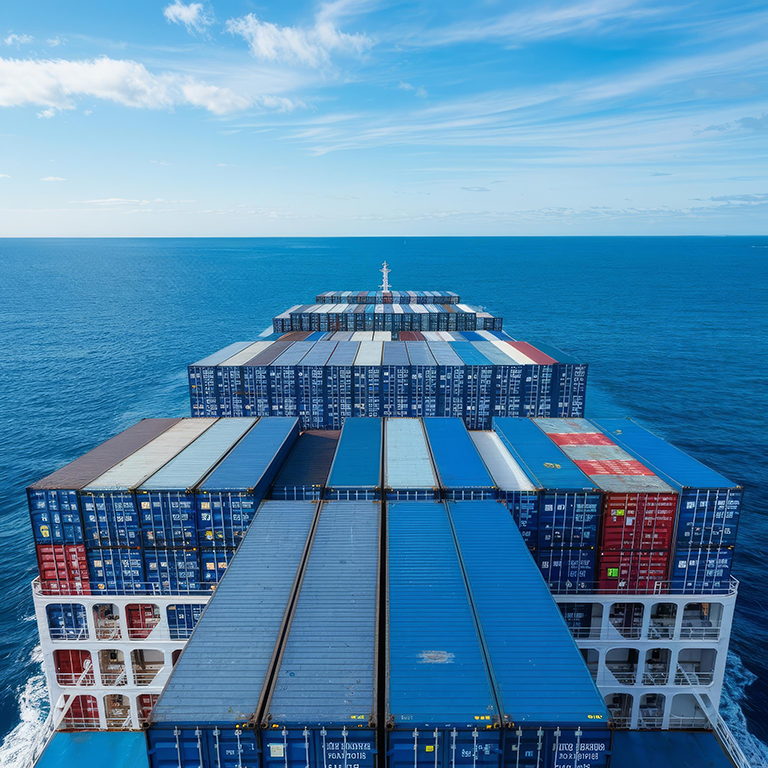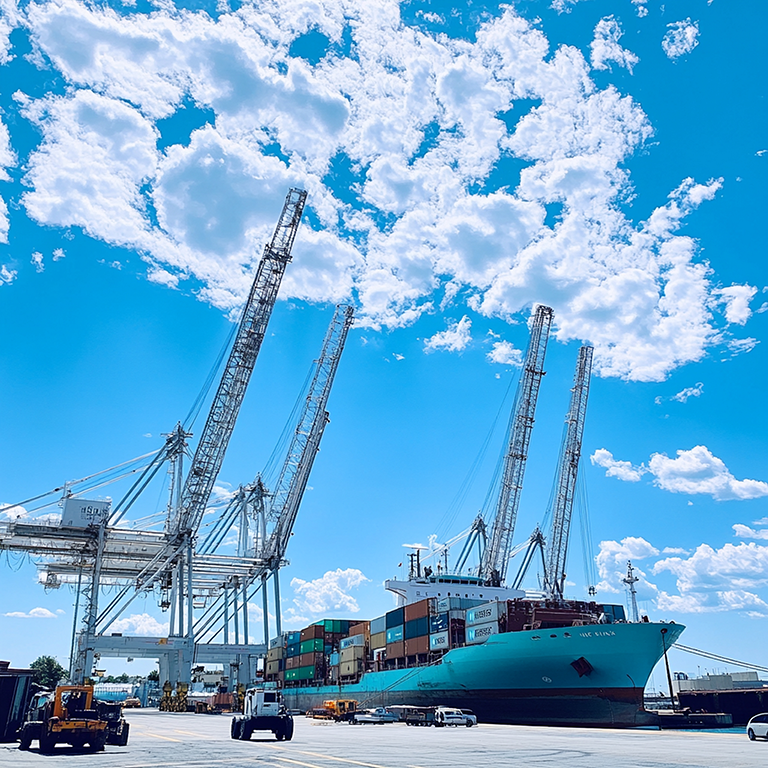




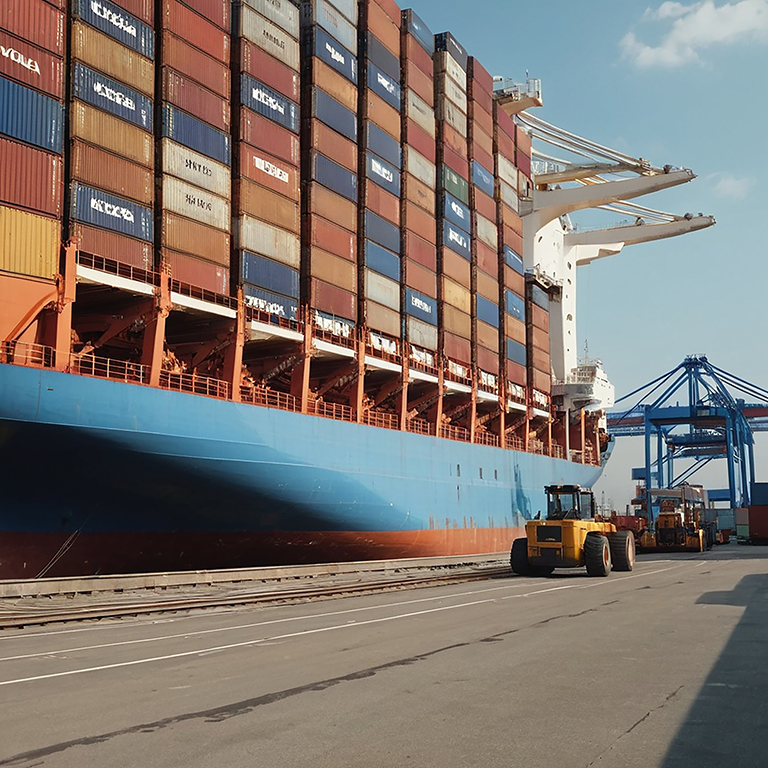
CMA CGM benefited significantly from higher freight rates and increased cargo volumes in the second quarter. Operating profit from its maritime operations rose by 42.4 per cent compared with the same period last year.
EBITDA for the maritime division rose from $1.59 billion to $2.26 billion. Turnover also rose sharply and the number of containers carried increased. The French shipping company thus confirms that container shipping once again enjoyed a strong tailwind in the spring.
CMA CGM benefits from higher freight rates
In the second quarter, CMA CGM transported 6 per cent more sea containers (TEU) than a year earlier. The shipping company itself refers to this as a favourable volume effect. Combined with improved freight rates, this resulted in a 22 per cent increase in turnover within its shipping operations.
The strong results do not come as a complete surprise. It was already known that the international container shipping sector had the wind in its sails during the spring months. Further background on current market developments can be found on the sea freight page.
Early peak season led to strong spring months
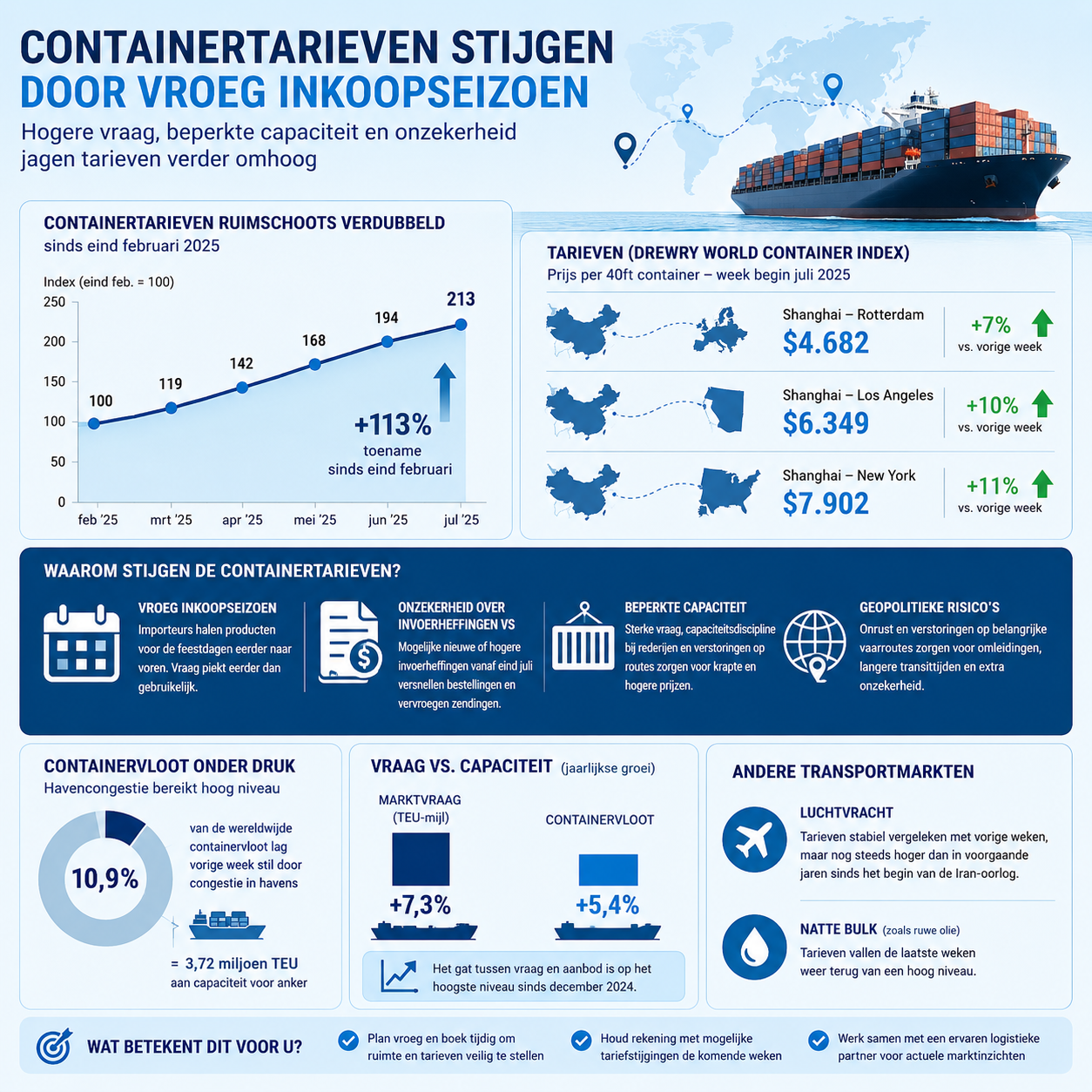
Competitor Maersk had previously revised its full-year profit forecast upwards. Partly due to the unrest in the Middle East, Western importers brought forward the shipment of their stocks for the coming winter, which resulted in higher volumes and rising rates for the shipping lines.
That early and buoyant peak season followed a gloomy start to the year. The first quarter, in fact, was a real let-down: CMA CGM saw its profits almost evaporate in the first three months, partly because rates were low at the time. This rapid turnaround demonstrates just how volatile the container market remains.
Spot rates are falling, but levels remain high
The major boom of the spring is now behind us. Spot rates in the container shipping industry have been falling in recent weeks, but price levels remain relatively high compared with last year.
According to Drewry’s World Container Index, the average rate for a 40-foot container on the Shanghai–Rotterdam route stood at $4,824 per container last week. That is still 47 per cent higher than in the same week last year.
For importers, this means the market is easing slightly, but that sea freight costs can still weigh heavily on the cost price. Companies with fixed selling prices, small margins or seasonally sensitive stock remain particularly vulnerable. Read more about importing and container sizes.
Ceva Logistics lags behind the shipping division
CMA CGM’s logistics operations, housed within its subsidiary Ceva Logistics, did not fare as well last spring. The logistics division’s turnover rose by 8.5 per cent in the second quarter, but EBITDA fell by 15.4 per cent.
Ceva’s operating profit fell from $459 million to $388 million. The French company points to pressure on freight forwarding activities in a challenging market environment and to ongoing difficulties in the automotive sector.
This contrast within the group is striking. Whilst the shipping division benefited from higher rates, the freight forwarding and logistics market was under pressure. It underlines the fact that higher container rates do not automatically benefit every link in the chain.
Terminals and air freight, on the other hand, are growing rapidly
The French transport group’s other activities, including terminal and air freight operations, performed particularly well. Turnover in this division rose by 47.6 per cent, whilst EBITDA increased by 44.5 per cent: from 234 to 338 million dollars.
For major shipping lines, diversification is becoming increasingly important. Profits are determined not only by ships, but also by terminals, air freight, intermodal transport and hinterland connections. Digitalisation is also playing an increasingly important role in this: smart data and AI applications make planning, rates and shipment information more predictable.
CMA CGM’s total result stands at $3 billion
All things considered, the performance of CMA CGM’s various divisions resulted in a total EBITDA of $3 billion. That is 31 per cent more than the $2.28 billion recorded in the same period last year.
The combination of higher rates, increased volume, strong terminal operations and air freight results more than offset the setback at Ceva Logistics. Nevertheless, the market remains vulnerable: the same market can turn on a sixpence should demand fall, capacity return or shipping routes change.
Uncertainty remains high for the coming months
Meanwhile, the future remains uncertain, as the shipping line itself emphasises. This is due not only to events in the Middle East, but also to tariff measures being taken by certain countries, which could affect global trade flows in the coming months.
For the container shipping industry, this means that volumes and rates remain sensitive to geopolitics, trade policy and importers’ stock-holding behaviour. If companies place orders later than usual or if capacity returns, price pressure may increase.
Implications for importers and exporters
CMA CGM’s figures show that sea freight costs remain a key factor. Shipping lines are benefiting from higher rates, whilst companies transporting goods are facing higher transport costs and surcharges.
This calls for thorough preparation: requesting rates in good time, comparing multiple routes and taking surcharges into account. Agreements regarding Incoterms, cut-off times and documentation also remain important. Read more about Incoterms, container handling and customs matters.
TOP closely monitors developments regarding CMA CGM, sea freight rates, capacity and shipping routes. It remains important for customers to act promptly and tailor their transport choices to costs, reliability and desired transit times. Request a quote with no obligation.
…a shipping line such as CMA CGM can both gain and lose out in the same market? Higher container rates boost the shipping division’s profits, whilst putting pressure on the margins of its own freight forwarding and logistics division.
Related news

Would you like to receive our newsletter?
Stay up to date with CMA CGM, sea freight rates, container markets and international logistics developments. Sign up now: