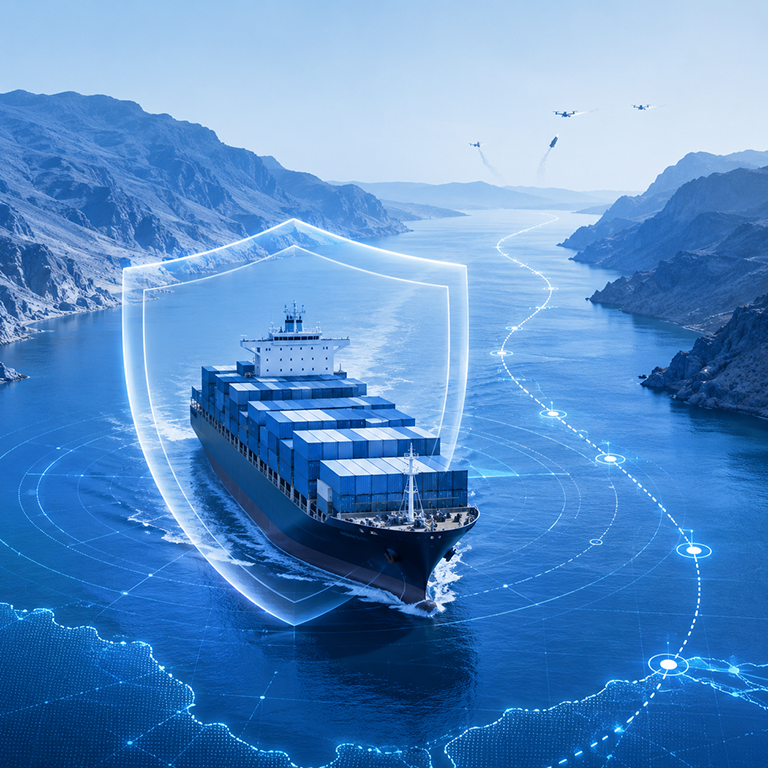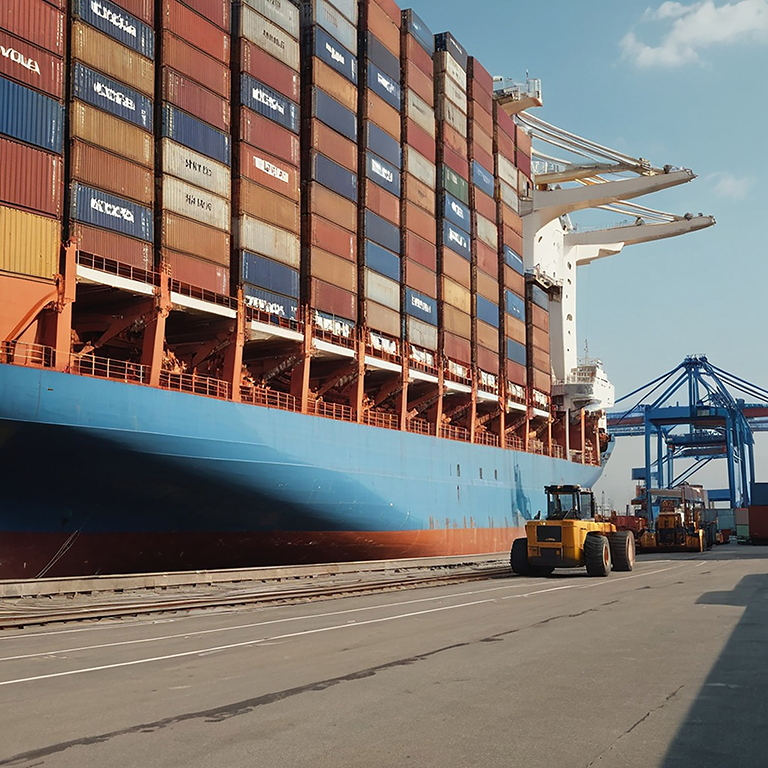




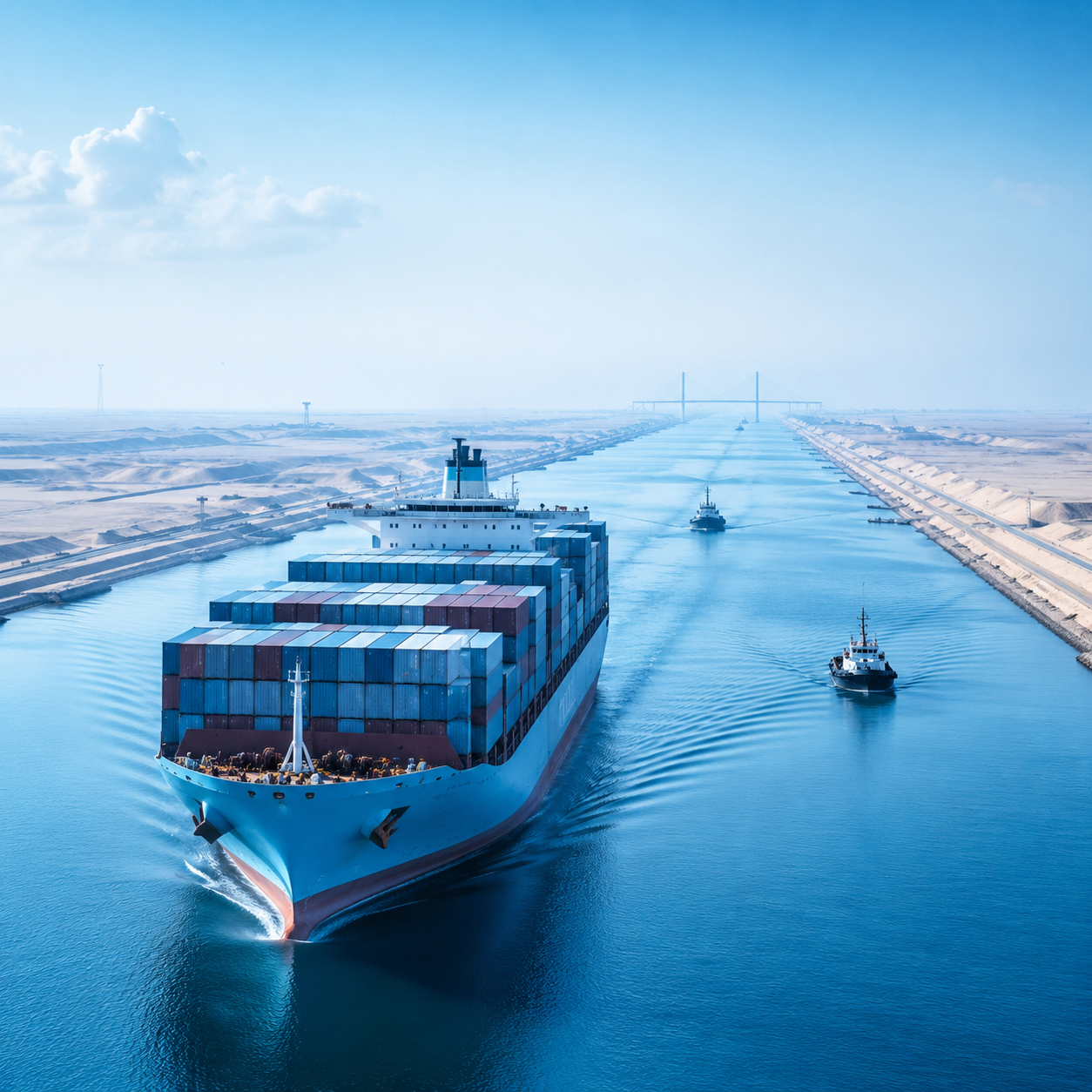
Maersk and Hapag-Lloyd, collectively known as the Gemini Cooperation, are once again routing four additional Asia–Europe services through the Suez Canal. The shipping lines announced on 14 September that services AE5, AE11, AE12 and ME2 on the westbound main service will sail via Suez rather than round the Cape of Good Hope, according to the trade publication The Loadstar. This accelerates the return to the shortest route between Asia and Europe.
The four services join the AE15 and AE19, two Asia–Mediterranean services that are already sailing via the Suez Canal. In a customer advisory, the shipping lines describe the route via the Suez Canal and the Red Sea as the fastest, most sustainable and most efficient way to transport cargo between Asia and Europe, resulting directly in shorter transit times.
The services affected are
The route change affects the Asia–Northern Europe service AE5, the Asia–Mediterranean services AE11 and AE12, and the India–Europe service ME2. The first vessel to pass through the Suez Canal on the AE11 service will be the 15,150 TEU Antonia Maersk, which departs from Tanjung Pelepas on 19 September. On the AE5 service, the 18,000 TEU Marchen Maersk will follow on 21 September. For the ME2, the 8,650 TEU Cornelia Maersk will be the first to sail, departing from Colombo on 24 September.
Red Sea crisis 27 per cent normalised
The announcement is part of a wider trend. According to new figures from Sea-Intelligence Consulting, published just before the Gemini news, 18 per cent of total westbound Asia-Europe capacity is now once again sailing via the Red Sea and the Suez Canal rather than round the Cape. On the return journey to Asia, that share is considerably higher at 38 per cent: shipping lines want their vessels back quickly in export markets struggling with severe port congestion following the recent typhoons.
On average across September, the Red Sea crisis has thus normalised by 27 per cent, according to the analyst. Shipping lines are therefore clearly normalising the return journey more quickly than the main leg of the voyage, where the value of the cargo and the risk are greater.
Houthi advance as an uncertain factor
Nevertheless, the return is by no means certain. The Houthis’ rapid military advance in Yemen last weekend could still thwart plans for further Red Sea and Suez transits, warns The Loadstar. The Houthis have stated that international shipping is free to sail through the Red Sea, with the sole exception of Saudi vessels. Sea-Intelligence notes, however, that this situation could change overnight should the group decide to resume attacks on merchant vessels.
Maersk and Hapag-Lloyd are also keeping their options open. The shipping lines are continuing to monitor the security situation in the Middle East closely and state that further adjustments within the Gemini route will depend on continued stability in the Red Sea region. The safety of crews, vessels and cargo remains the top priority.
Implications for importers and exporters
For shippers on the Asia-Europe route, this means in practical terms that transit times and arrival times will shift. Shipments on the AE5, AE11, AE12 and ME2 routes will soon be days faster than via the Cape, but it is precisely during the transition phase that ETAs may change and vessels may arrive in groups. This will have an impact on the planning of unloading, container handling and hinterland transport. Importers from Asia would be well advised to check current bookings for any changes to sailing schedules.
Via the TOP platform, you can track arrival times and route changes in real time, so you can see immediately if a shipment is due to arrive earlier or later. If you’re unsure which shipping line or route best suits your cargo, or what the changes mean for your space and equipment choices, please request bespoke advice.
shipping lines are normalising the return voyage to Asia much faster than the outbound voyage? According to Sea-Intelligence, 38 per cent of capacity heading to Asia is already sailing via Suez again, compared with 18 per cent on the main westbound route. On the return leg, the cargo is lighter and shipping lines want to get their vessels back to the Asian export ports as quickly as possible.