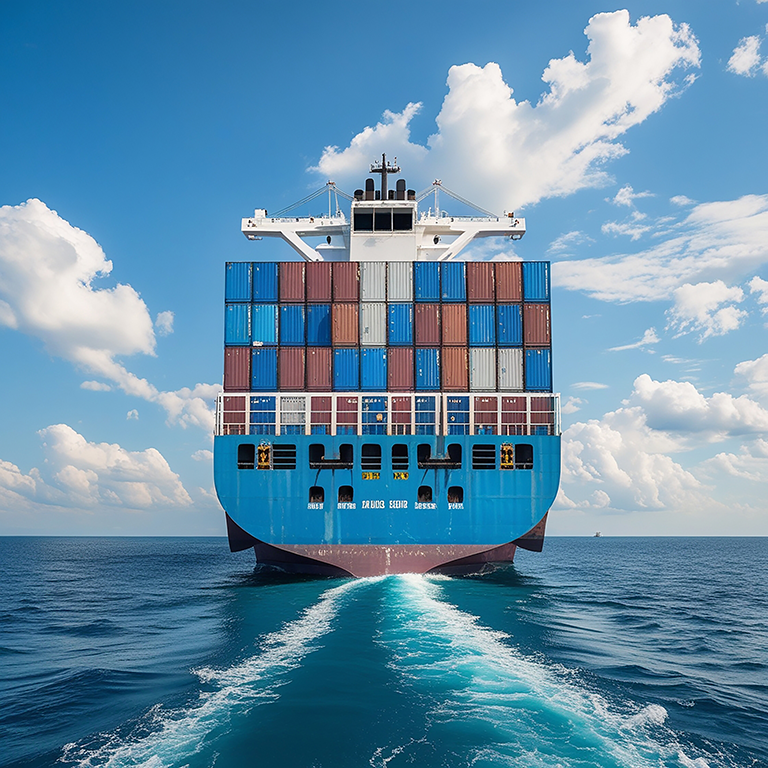





Insurance premiums for ships in the Red Sea have risen following a new threat from the Houthis. The Yemeni movement has announced a maritime blockade of Saudi Arabia, once again increasing uncertainty for shipping companies and shippers.
The exact consequences for shipping traffic are still unclear. However, insurers and shipowners are responding immediately to the increased risk. According to the Reuters news agency, premiums for war risk insurance in the Red Sea have already risen from 0.3 per cent to 0.75 per cent of the value per vessel.
Insurance premiums rise following Houthi threat
The rise in insurance premiums highlights just how sensitive the shipping market remains to threats in the Red Sea. Even before it is clear whether the Houthis will actually carry out new attacks, insurers are already pricing in the higher risk.
For a vessel worth tens of millions of dollars, a difference in premium from 0.3 to 0.75 per cent can have immediate and significant financial consequences. For shipping companies, this means higher costs per voyage. For shippers, these costs may later be passed on via surcharges, higher freight rates or amended contract terms.
For companies importing or exporting goods via routes around the Red Sea, it therefore remains important to take into account price fluctuations, route choices and additional insurance costs. Further information on international sea freight can be found on the sea freight page.
The Red Sea remains a vulnerable shipping route
The Red Sea is a crucial corridor for international trade. Ships travelling between Asia and Europe via the Suez Canal also pass through the Bab el-Mandeb, the narrow strait between Yemen and the Horn of Africa. It is precisely there that the risks posed by Houthi activity have been high for some time.
Since November 2023, Houthi attacks using missiles and drones have caused major disruptions to shipping. Since then, many container shipping lines have opted for the longer route via the Cape of Good Hope. This detour is more expensive, takes longer and requires greater shipping capacity.
The new threat to Saudi ports is once again increasing uncertainty. Even when ships are not directly attacked, the fear of attacks may be enough to prompt changes to routes, increase insurance costs or lead to additional security measures.
Blockade of Saudi ports causes unrest
The Houthis claim that their new maritime blockade of Saudi Arabia is a response to a Saudi air strike on Sana’a airport. The Yemeni capital is under Houthi control, whilst the internationally recognised government of Yemen holds power mainly in the south of the country.
Saudi Arabia has condemned the threat and states that it will take all necessary measures to protect shipping traffic to and from its own ports. Nevertheless, the situation remains uncertain as long as it is unclear how far the Houthis intend to take their threat.
Shipping expert Lars Jensen noted that a container ship operated by Global Feeder Shipping, a shipping company from the United Arab Emirates, which was en route to the Red Sea, immediately turned back. This underlines how quickly shipping companies react when the risk landscape changes.
Insurance premiums are passed on in transport costs
Higher insurance premiums are not just a problem for shipowners. Ultimately, these costs may also be passed on to shippers, importers and exporters. In areas of uncertainty, shipping lines often apply additional surcharges for war risk, security, fuel, route changes and delays.
For businesses, this means that quotations may change more quickly. Rates may be valid for shorter periods, surcharges may be adjusted during the contract period, and routes may be rebooked. Particularly for goods with low margins, an increase in transport costs can have a direct impact on the cost price.
It is therefore advisable not to focus solely on the base rate when arranging shipments through high-risk areas. Insurance terms, surcharges, transit times, route reliability and alternative shipping options are also important. Read more about requesting rates, importing and exporting.
Saudi Red Sea ports had become an alternative
The threat comes at a sensitive time. Ports on the Red Sea coast of Saudi Arabia have become increasingly important in recent months as an alternative for cargo that, due to the Iran conflict and the blockades around the Strait of Hormuz, could not be shipped via ports on the Persian Gulf.
If the Houthis succeed in choking off those Saudi ports, a new bottleneck will arise for international trade. This would affect not only routes via Hormuz, but also alternatives via the Red Sea. This could lead to additional pressure on ports, longer detours and higher costs.
This makes the puzzle even more complex for logistics planners. A route that was considered an alternative only yesterday may be under pressure again today. This makes flexibility in the supply chain more important than ever.
Attacks involving missiles and drones remain a risk
It remains unclear whether the Houthis intend to reinforce their new blockade with missiles and drones once again. Previous attacks dating from November 2023 have shown that even limited attack campaigns can have major consequences for shipping flows.
It was reported last week that the Houthis had readied their weaponry. This followed reports that Iran had allegedly called on the Yemeni movement to resume attacks on ships should the United States bomb energy facilities in Iran.
For shipowners and insurers, the risk is the primary concern. As soon as the likelihood of incidents increases, premiums rise and routes are reassessed. This often happens more quickly than official warnings or government measures can be adjusted.
Consequences for shippers and freight forwarders
For shippers and freight forwarders, the rise in insurance premiums means that costs and planning may come under pressure once again. Shipments via the Red Sea may become more expensive, whilst alternative routes via the Cape of Good Hope require extra time and capacity.
Containers may also take longer to reach their destination. This has implications for stock management, sales planning and cash flow. When goods arrive later, products remain tied up in the supply chain for longer and companies are less able to deliver to customers promptly.
TOP is closely monitoring developments regarding insurance premiums, Houthi threats, the Red Sea and alternative shipping routes. It remains important for customers to act promptly when faced with high-risk routes and to carefully assess quotations for surcharges, validity and route selection. Further information can be found on the pages covering sea freight rates, container handling and customs.
The Red Sea remains crucial to global trade
The latest unrest highlights just how vulnerable global trade is to disruptions at maritime chokepoints. The Red Sea, Bab el-Mandeb, the Suez Canal and the Strait of Hormuz are key links in international transport chains.
When one of these routes comes under pressure, shipping lines, insurers and shippers react immediately. When several routes become uncertain at the same time, costs and complexity rise rapidly. This makes alternative routes, good planning and reliable information increasingly important.
The rise in insurance premiums in the Red Sea is therefore more than just a financial signal. It is a warning that risks in the region are mounting once again and that logistics chains must prepare for new disruptions.
…war risk insurance is often taken out on a per-voyage basis for ships sailing through high-risk areas? When the threat level rises, the premium can increase rapidly, even before any new attacks actually take place.