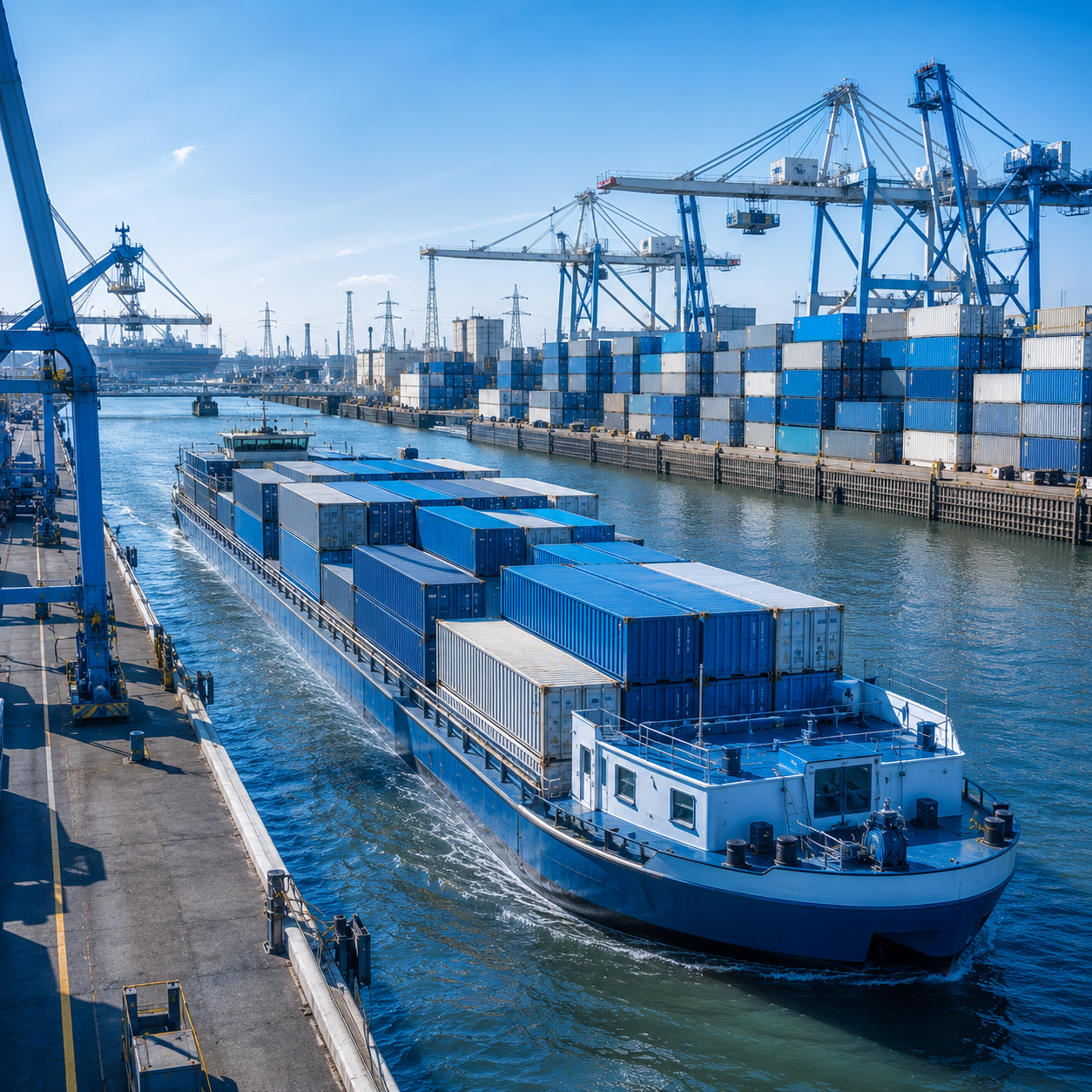




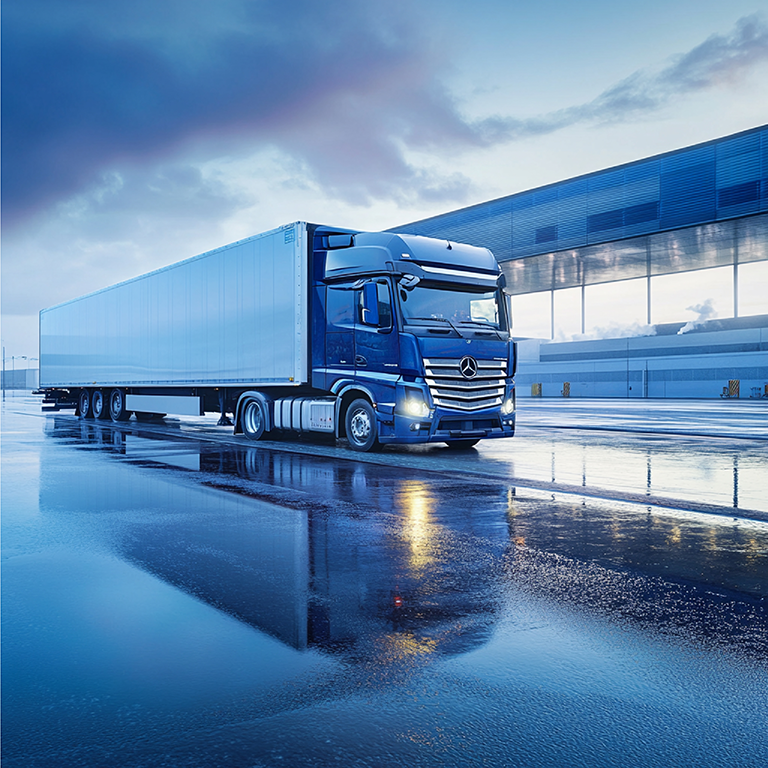
Rivers are running dry, prompting Germany to take extreme measures. At least four German federal states are temporarily lifting the driving ban that has kept lorries off the motorways on Sundays since 1956. The measure is intended to provide an alternative to transport by water, which has come to a standstill.
In large parts of Germany, logistics have ground to a halt because rivers are either unnavigable or less navigable due to the persistent drought. Transport companies are therefore scrambling to find alternatives to shipping. The emergency measure came into force this weekend.
Rivers unnavigable: Sunday driving ban temporarily off the table
With the rivers running dry, the use of lorries is the obvious solution. However, until now, lorries were not permitted on the roads on Sundays and public holidays until 10.00 pm. In July and August, this ban also applies on Saturdays from 7.00 am to 8.00 pm, as the motorways are busier with holiday traffic at that time.
In any case, Rhineland-Palatinate, North Rhine-Westphalia, Saarland and Lower Saxony have decided that the situation is critical. They are temporarily lifting the so-called ‘Sonntagsfahrverbot’ (Sunday driving ban) for lorries. In some federal states, the emergency measure applies until the end of this month; in others, it extends until the end of September.
The four federal states are thus responding to a call from the newly appointed Minister for Transport, Steffen Bilger (CDU). “We cannot change the weather,” the minister told the ARD news programme *Tagesschau*, “but we can ensure that the economy gets through these difficult weeks.” Want to know more about road transport? Visit the road transport page.
Low water levels are affecting the Rhine, Danube and Elbe
The severe drought is hampering waterborne transport on the Rhine, Danube and Elbe, as well as on the tributaries and canals that flow into them. Due to the low water levels, ships are currently only able to utilise 20 per cent of their usual cargo capacity in some places.
The cargo must therefore be spread across several vessels, which is driving up prices. The cost of freight transport by water from Rotterdam to Karlsruhe has risen to between 60 and 70 euros per tonne, compared with 45 euros in June, traders told the Reuters news agency.
For shippers who rely on inland waterway transport, this means higher costs and longer lead times. Those who regularly use river transport would be wise to have alternatives to fall back on. Read more about the options for barge and intermodal transport.
Sixty to one hundred lorries for a single ship
The scale of the replacement challenge is enormous. It can easily take sixty to a hundred lorries to replace a single fully loaded cargo ship. Minister Bilger therefore also wants to investigate whether freight trains could offer an alternative to the paralysed river transport system.
However, experts point out that the German rail network, which has been creaking at the seams for some time, does not have the capacity to fully absorb the loss of transport by ship. The rail network is also struggling with a backlog of maintenance and heavily congested corridors.
In practice, therefore, the solution will have to come from a combination of transport modes: partly road, partly rail and, where possible, inland waterway transport with limited cargo. More information on rail transport can be found on the rail page.
Trade unions are calling for compensation for drivers
Last Thursday, Minister Bilger held consultations on the crisis situation with employers’ organisations and the trade unions. The trade unions, in particular, have reservations about the plan. They argue that drivers are bound by driving and rest periods, which means the expected relief may not materialise.
A lorry driver who gets behind the wheel on a Sunday must be compensated, says Dirk Engelhardt of the Freight Transport, Logistics and Waste Management Federation. He warns that the lorry will simply be out of service on another day of the week.
The unions also fear that the profession of lorry driver will not become any more attractive if lorry drivers are also required to drive on Sundays. According to the trade union movement, Germany already has a shortage of 100,000 lorry drivers. Anyone who seeks to undermine the Sunday ban purely for economic reasons is undermining the working and living conditions of hundreds of thousands of professional drivers, argues logistics expert Uwe Köpke of the Ver.di trade union.
The driving ban has been in place since 1956 and was also lifted during the Covid pandemic
This is not the first time the driving ban has been suspended due to a crisis. Six years ago, the ban on Sundays and public holidays was also temporarily suspended when the coronavirus pandemic disrupted German logistics.
The Sonntagsfahrverbot was introduced in 1956 to ban heavy goods vehicles from the roads on the day when most Germans went out to relax after the working week. In 1969, the driving ban was extended to Saturdays in July and August.
Due to the temporary suspension, motorists should therefore be prepared this weekend to find themselves driving alongside lorries on German motorways, even on Sundays.
Rivers running dry
For importers and exporters transporting goods via the European hinterland, the consequences are immediately felt. Low-water surcharges, such as the well-known ‘low water surcharge’, can significantly increase the cost of a shipment. Transit times also increase when cargo has to be redistributed or rebooked onto road or rail.
This calls for thorough preparation. Companies would be well advised to request quotes in good time, compare different modes of transport and factor in surcharges and longer lead times. Flexibility in planning is worth its weight in gold in this market.
TOP closely monitors river water levels, road transport capacity and developments on the railways. We actively work with our customers to find the best combination of transport modes, costs and transit times. Would you like to know what the current situation means for your shipments? Simply request a quote or read more about Incoterms.
…it takes between sixty and a hundred lorries to replace a single fully loaded inland waterway vessel? So when rivers run dry, a much greater capacity is quickly required on the roads to transport the same cargo.