



Inland terminals want a swift solution to congestion
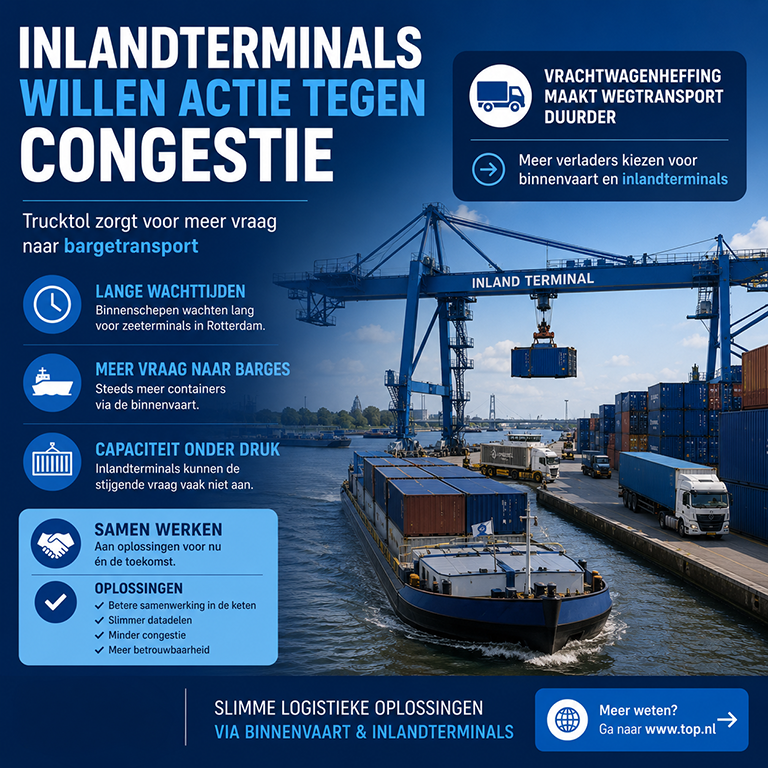
Inland terminals in the Netherlands are seeing pressure on inland waterway transport continue to mount. According to Michel van Dijk, logistics director at Van Berkel Logistics and chairman of the trade association VITO, congestion in Rotterdam and growing demand for barge transport are causing ever-increasing problems in container transport to the hinterland.
More and more shippers and freight forwarders want to switch from road transport to inland waterway transport. The introduction of the lorry tax plays a significant role in this. At the same time, traffic jams, infrastructure maintenance works and rising costs are causing companies to seek alternatives to road transport.
Inland terminals are struggling with long waiting times
According to Van Dijk, inland terminals are often barely able to cope with rising demand due to capacity issues and the long waiting times for inland vessels in Rotterdam. Barges regularly spend hours or even days waiting at maritime terminals, resulting in significant productivity losses.
The congestion issue has been ongoing for some time, but according to him, a structural solution is still lacking. A major problem is that many different parties are involved in container transport between the port and the hinterland, whilst no one feels fully responsible for the entire chain.
Shipping lines, shippers, freight forwarders, inland waterway operators and road hauliers all have their own interests. As soon as a delay occurs anywhere in the logistics chain, it has immediate consequences for other links in the system.
Inland terminals seek solutions through data sharing
To make congestion more manageable, Van Berkel is collaborating with Contargo and ITG Terminal Group on the Connected Trade Network project. Within this initiative, container data is shared via a common standard for the logistics hinterland.
The aim is not to add more data, but rather to use existing information more intelligently. According to Van Dijk, the digital identity of containers has become increasingly complex in recent years. In addition to data on cargo and destination, safety information, weights, status updates and CO2 reports are also being added to container systems.
This makes the planning of container transport increasingly complicated.
Inland terminals are seeing an increase in urgent containers
According to Van Dijk, the delays are also leading to a growing number of urgent containers. When barges are unable to deliver containers on time, road transport is still used to avoid high detention and demurrage costs.
At Van Berkel, staff therefore regularly step in themselves to ensure containers are still dispatched on time. Last year, Van Dijk even obtained his lorry driving licence so that he could collect or deliver containers himself in emergencies.
According to him, inland waterway transport is still too often at the bottom of terminals’ priority lists under the current system. At the same time, pressure is mounting from customers who rely on reliable delivery times and transparent communication regarding delays and additional costs.
…the lorry tax is expected to create additional demand for inland waterway and intermodal transport as road transport becomes more expensive?
Would you like to receive our newsletter?
Stay up to date with container congestion, terminal capacity and developments in inland waterway transport and sea freight. Sign up now: