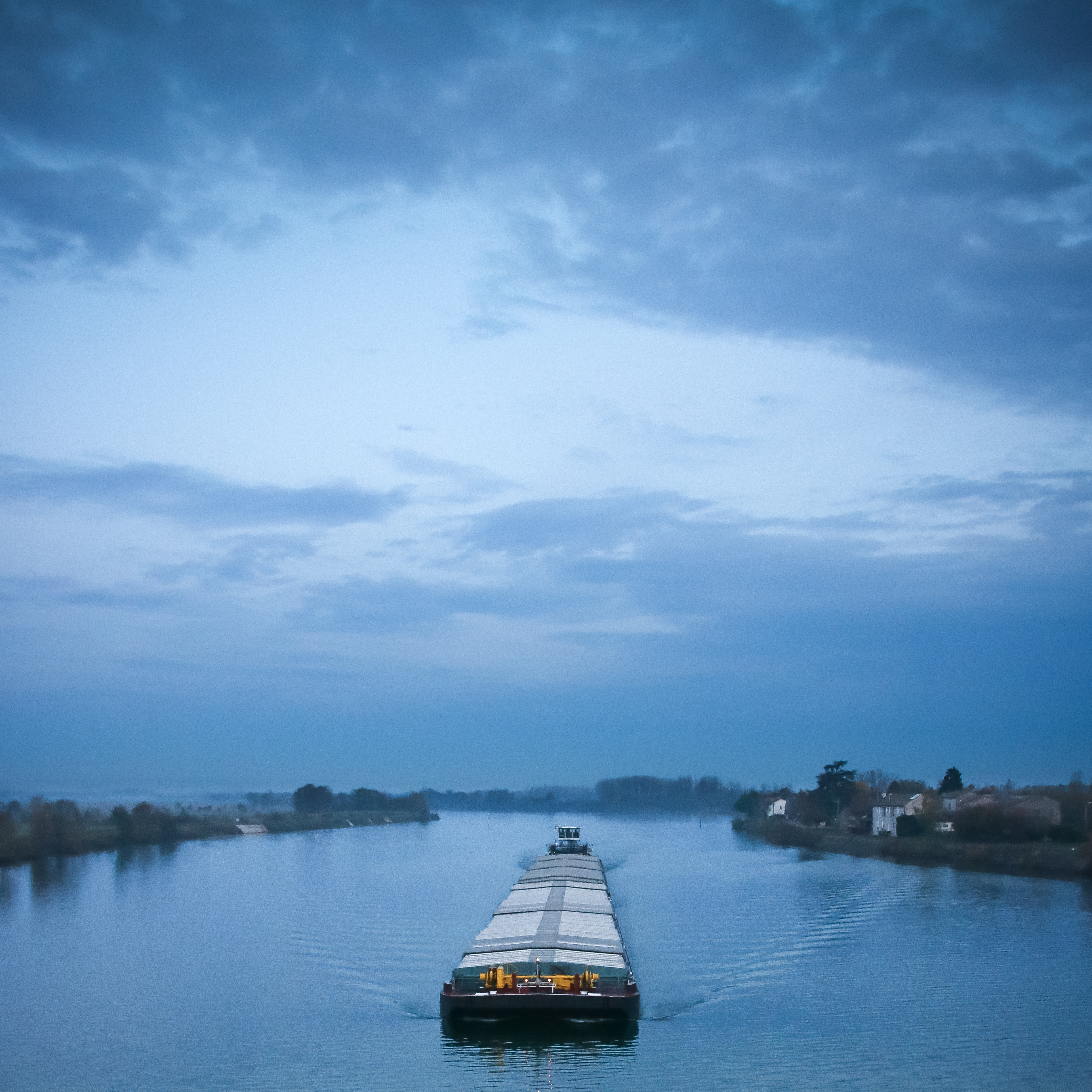



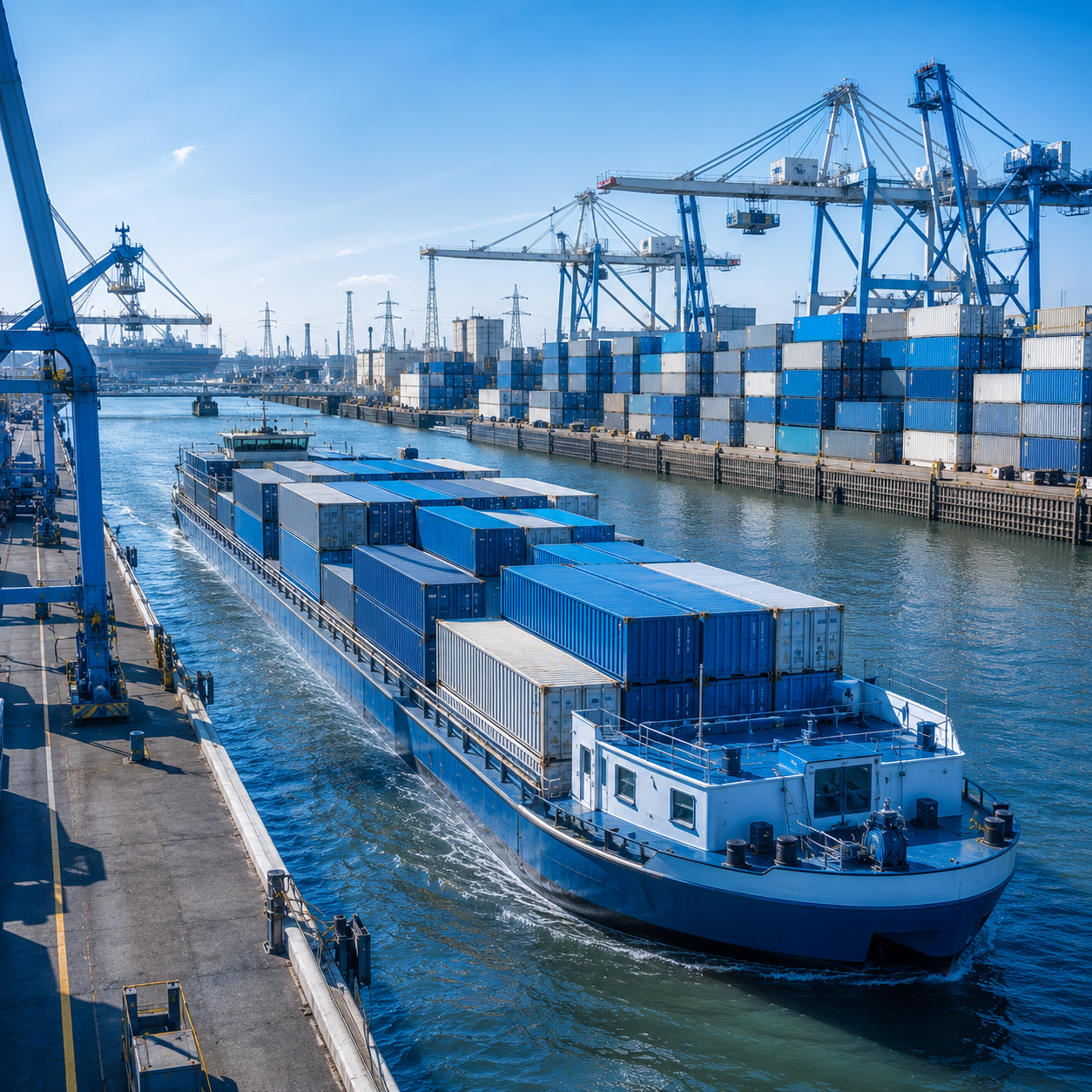
Inland waterway transport is facing a significant increase in vessel movements due to extremely low water levels. There is plenty of cargo, but vessels can carry far less because of the low water levels.
For some skippers, this means higher rates, whilst others are actually missing out on cargo and turnover. The impact of low water levels is becoming increasingly apparent, particularly on the Rhine in Germany and on sections of the Dutch rivers.
Inland waterway transport restricted by low water levels
The dry summer is causing extremely low water levels in the rivers. In Germany, the water level at the Kaub gauge is below 1.50 metres in some places. For many inland vessels, this is a critical threshold, as it means they can only draught much less deeply.
At such low levels, vessels are sometimes unable to sail back empty. The vessel then tilts backwards and the propeller may strike the riverbed. Sailing fully laden both ways then becomes the only viable option. If the water level at Kaub drops further towards 1.35 metres, navigation on certain stretches will become very difficult for many vessels.
This is significant for international logistics. The Rhine is a crucial corridor linking seaports, industrial areas and the European hinterland. If inland waterway vessels can carry less cargo per voyage, this has a direct impact on planning, costs and availability. Further information on combined transport solutions can be found on the multimodal transport page.
Six trips for the same volume
The impact on the volume of cargo carried per vessel is significant. A skipper told *Nieuwsblad Transport* that a vessel travelling between Mainz and Bingen in southern Germany can normally carry around 1,800 tonnes. Due to the low water levels, this is now sometimes as little as 300 tonnes.
To carry the same amount of cargo, that ship therefore has to make six trips. This results in more vessel movements, more planning, higher operational costs and greater pressure on available crew and fleet capacity.
Clients are feeling the effects too. Large quantities of sand, gravel, building materials, grain, containers and bulk goods cannot simply be transferred one-to-one to lorries or trains. For heavy and large volumes, inland waterway transport often remains the most logical mode of transport, but low water levels make that choice less predictable.
Inland waterway transport in the Netherlands is also facing restrictions
In the Netherlands, the situation is less severe than on some German routes, but the impact is noticeable here too. According to skippers involved, there has already been a significant reduction in the loading volume per vessel on the Waal near Nijmegen and on the IJssel.
Inland waterway skipper Wouter van Turenhout explains that he is currently carrying 470 tonnes, whilst his vessel can normally handle 800 tonnes. That is just over half the usual capacity. Because his client needs extra cargo, he is making more frequent trips back and forth between Deest and Oss.
Instead of the three scheduled trips per week, he now makes four to five return journeys. If a vessel cannot carry the required quantity, the charterer has to deploy additional vessels. This makes planning more complex and increases the pressure on available inland waterway capacity.
Prices in inland waterway transport react differently
The financial consequences vary from skipper to skipper and from contract to contract. Skippers operating under fixed agreements are relatively less affected by market fluctuations. Van Turenhout, for example, is compensated for any volume he is unable to carry. He is paid for up to 700 tonnes, even when he transports less cargo.
Other skippers, on the other hand, are benefiting from the shortage of available vessels. As more voyages are needed to carry the same amount of cargo, demand for inland waterway capacity is rising. As a result, rates on the open market can rise sharply.
According to those involved, these large fluctuations are not good for the reliability of inland waterway transport. Customers such as construction firms, concrete plants and grain processors often plan well in advance. Significant price differences are difficult for them to factor into their calculations.
Terminals are on tenterhooks
Michel van Dijk, chairman of the Association for Inland Terminals, sees concerns mounting. In his view, the situation is not yet critical, but terminals are on tenterhooks. Most terminals currently still have alternative routes via other rivers.
Low water levels are less of an issue on the Meuse. However, the Waal is becoming a constraint, particularly when connections with other destinations need to be made. The IJssel also narrows during low water, which means destinations such as Doesburg and Twente may experience greater disruption.
For container logistics, this means that the availability of inland waterway vessels and containers may come under pressure. Fewer calls at Rotterdam and the need for more sailings make planning more complicated. Read more about container handling, sea freight and customs.
More port calls make planning more complex
Low water levels do not only affect the weight a vessel can carry. They also influence the way in which terminals and planners have to allocate their capacity. When vessels can carry fewer containers or bulk cargo, more calls are needed to move the same volumes.
In Rotterdam, these calls must be scheduled alongside seagoing vessels, inland waterway vessels, lorries, trains and terminal operations. Consequently, more frequent but smaller inland waterway movements can place additional pressure on quays, planning systems and staff.
On the other hand, at low water, inland waterway vessels sometimes call at fewer different terminals and operate more on a point-to-point basis. This may simplify the route slightly, but still requires more vessels or more sailings to maintain volumes.
Tipping point draws nearer during periods of extremely low water levels
There is a point beyond which sailing becomes less viable, both economically and operationally. When a vessel can carry only a very small number of containers or very little tonnage, it may become more attractive to transport cargo temporarily by lorry or train.
That tipping point varies depending on the route, type of cargo and customer agreements. For large bulk shipments, switching to road transport is often difficult, as it would require huge numbers of lorries. For certain container flows, a shift to multimodal transport can sometimes offer a temporary solution.
It is therefore advisable for companies to discuss alternatives in good time in the event of prolonged low water levels. These might include alternative terminals, different waterways, allowing for extra lead time, the temporary use of road transport or combinations with rail. Further information can be found on the pages about road transport and multimodal transport.
Inland waterway transport remains important, but vulnerable
Inland waterway transport remains a key link in Dutch and European logistics. Large volumes can be transported efficiently, relatively sustainably and with less road congestion. However, low water levels demonstrate that this mode of transport is also vulnerable to weather conditions and river levels.
For shippers and logistics service providers, flexibility is therefore key. Those who rely on inland waterway transport must take into account lower loading capacities, longer lead times, higher rates and greater uncertainty in planning during dry spells.
TOP is closely monitoring developments relating to inland waterway transport, low water levels and terminal planning. For customers, it remains important to coordinate shipments in good time and keep alternatives open should water levels fall further.
…the Kaub gauge on the Rhine is often used as an indicator of navigability towards southern Germany? When water levels are low, ships can carry much less cargo, meaning more voyages are required.