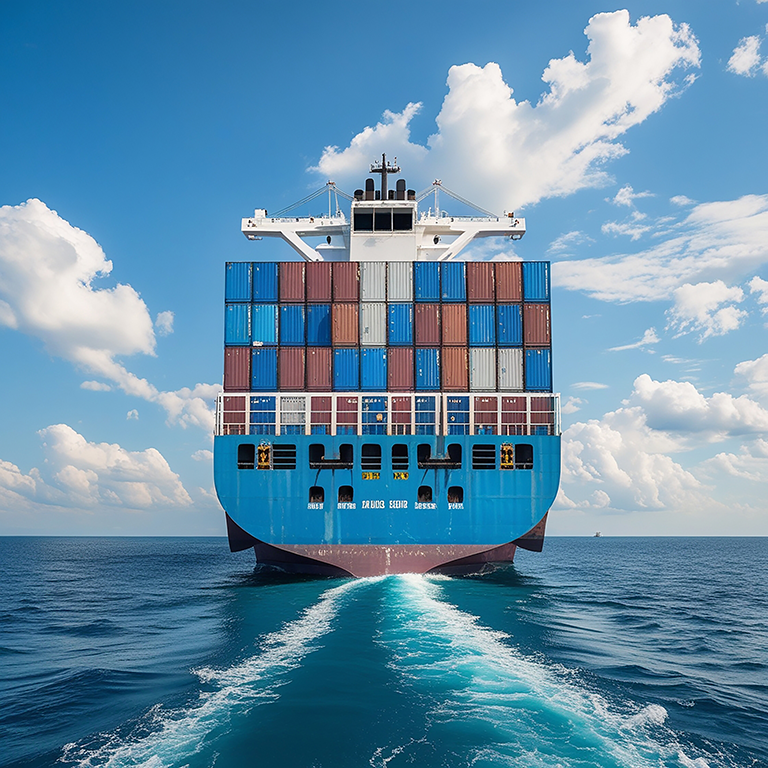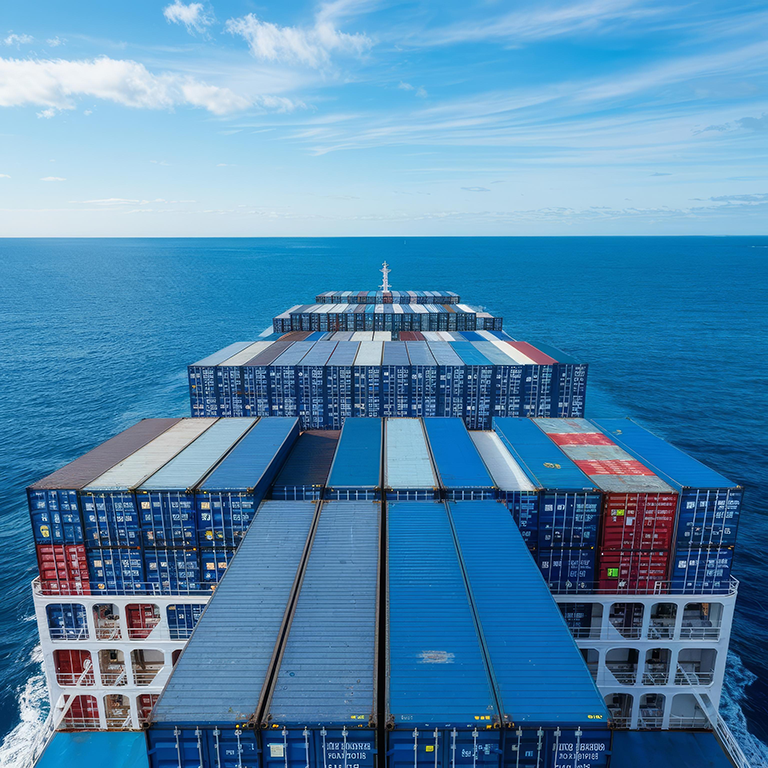




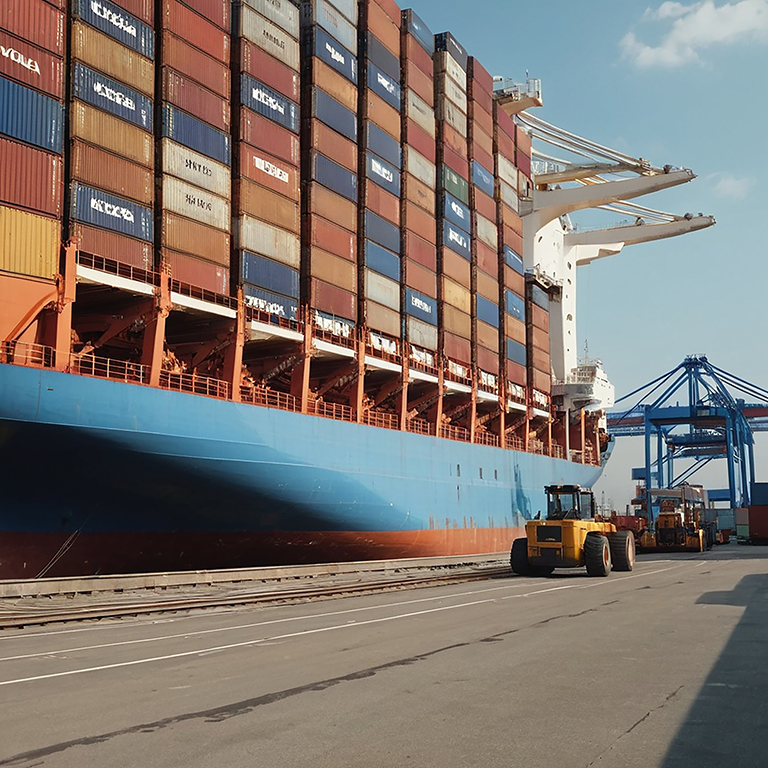
Maersk is on course to drop out of the top three international container shipping lines by 2028. This is according to the Singapore-based analyst Linerlytica, as reported by Nieuwsblad Transport, following the news that the Chinese company Cosco is investing three billion dollars in the construction of eighteen new container ships. The Danish shipping company, which has been the world’s number one for many years, is increasingly having to share its position at the top with fast-growing competitors.
The balance of power at the top has already shifted significantly in recent years. According to a market analysis by Xpert Digital, MSC tops the global rankings with a fleet of over 7.33 million TEU and a market share of 21.5 per cent. Maersk is in second place with 4.72 million TEU; the gap with the leader stands at more than 2.6 million TEU. One TEU stands for one twenty-foot container equivalent, the standard unit of measurement for shipping capacity.
Cosco launches an offensive with a multi-billion order
The immediate trigger for Linerlytica’s forecast is the order placed by Cosco at the end of August. The Chinese state-owned shipping company ordered eighteen new container ships worth the equivalent of approximately three billion dollars, reports Nieuwsblad Transport. With this order, Cosco is expanding its capacity at a time when Maersk is being more cautious about fleet expansion.
It remains to be seen who will take over Maersk’s third place, given the Chinese shipping company’s rise. Alongside MSC and Maersk, the French company CMA CGM now also ranks among the top three; together, these three control almost 48 per cent of global container capacity, according to Xpert Digital.
Market growth is concentrated at the top
Concentration in the container shipping sector is at a historic high. According to Xpert Digital, the ten largest shipping lines account for 84.1 per cent of all capacity, whilst the thirty largest account for as much as 93.4 per cent. At the same time, supply is growing rapidly: the global order book represents around 34 per cent of the existing fleet, the highest percentage in more than ten years.
This growth is unevenly distributed. In 2025, an average of 180,000 TEU of new vessels was added each month, whilst only 6,000 TEU was scrapped over the whole year. Demand is not keeping pace: volume growth of around three per cent is expected for 2026, compared with 3.6 per cent capacity growth.
Overcapacity is putting pressure on rates and margins
The impact of this oversupply is being felt in freight rates. According to Xpert Digital, spot rates – the prices for one-off bookings outside long-term contracts – on key east-west routes were at times more than 50 per cent lower than a year earlier. Maersk itself is not immune to this either: the shipping company’s Ocean division recorded an operating loss of $153 million in the fourth quarter of 2025.
As newbuild orders are placed years in advance, Xpert Digital expects overcapacity to persist until at least 2028 or 2029. In such a market, maximum fleet size is no longer a guarantee of profit, and this partly explains why Maersk is taking a different course from competitors who are placing orders in large numbers.
Maersk prioritises reliability over size
The fact that Maersk is losing ground in the rankings does not mean the shipping company is standing still. Together with Hapag-Lloyd, Maersk launched the Gemini partnership in early 2025, a network of around 340 vessels focused on punctuality. According to Xpert Digital, Gemini achieved a schedule reliability of over 90 per cent on the main routes, compared with a global average of 62.4 per cent in April 2026.
To put this into perspective: the battle for the top spot is therefore largely symbolic. In day-to-day practice, what counts is not who has the most ships, but who transports cargo reliably, at a competitive price and with sufficient available space. And that may be a different shipping line depending on the route and the moment.
Implications for importers and exporters
For shippers, the key lesson is that ‘the largest shipping line’ has become a moving target. Those who routinely entrust their cargo to a single carrier may miss out on more competitive rates, better sailing schedules or greater capacity offered by a competitor. TOP therefore deliberately operates independently of any particular shipping line: for each consignment, we assess which carrier currently offers the best combination of price, transit time and reliability. An overview of the options is available on the page about our services.
In practical terms, this means: have your current agreements periodically reviewed against market conditions, particularly now that rates are under pressure due to overcapacity. Anyone wishing to find out what a wider choice of carriers could mean for a specific goods flow can request a no-obligation consultation or ask for a quote straight away. Container handling also remains under one roof, regardless of which shipping line transports the container.
…according to Xpert Digital, an average of 180,000 TEU of new container ships were delivered each month in 2025, whilst only 6,000 TEU were scrapped in the whole of that year? That difference explains the current overcapacity at a glance.