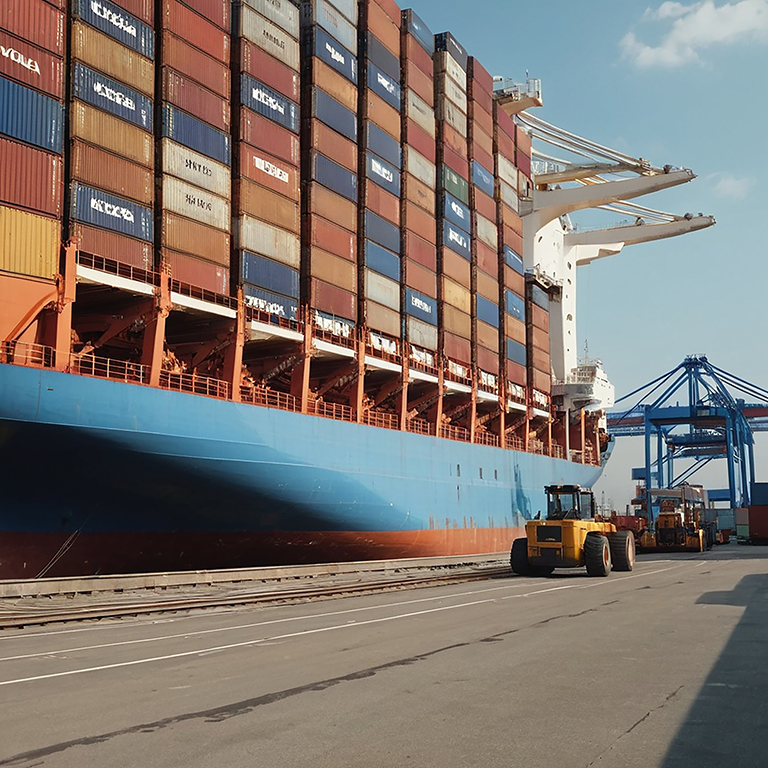




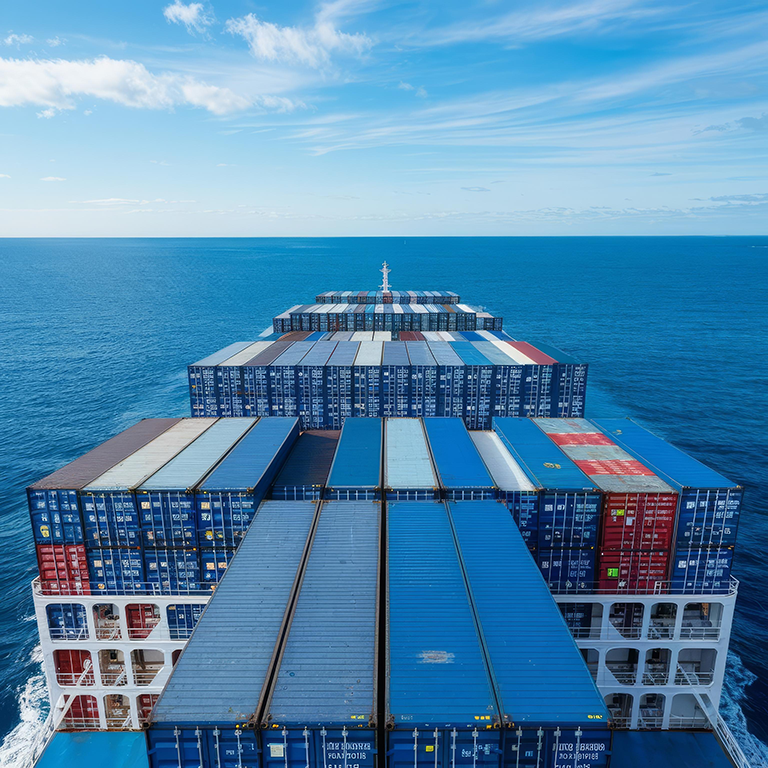
Container rates are set to remain high until at least the end of September. This is the view of Yen Yi-Tsai, president of the international logistics service provider T3ex Global Holdings. According to him, Red Sea detours, port congestion, extreme weather and strikes in Europe are collectively exerting significant pressure on the actual available capacity in the container shipping industry.
Yen estimates that approximately 1.7 million TEU of capacity has temporarily disappeared from the market. On top of that, some 2.4 million TEU of empty containers are stuck in ports, comparable to the entire fleet of Evergreen Marine. In air freight, too, the signs point upwards: fewer direct flights between the US and China and strong demand for AI servers are giving air freight rates further scope to rise in the third quarter.
Capacity is shrinking due to a build-up of disruptions
On paper, there is still more shipping capacity than demand this year. Yet container rates are rising against this trend. According to Yen, the explanation lies in a rare combination of incidental and structural factors occurring simultaneously: an “event-driven plus structural” rally, as he described it during an investors’ conference.
Typhoon Bailu brought parts of Asian ports to a standstill. Unseasonal weather lowered water levels in the Panama Canal and the Rhine, thereby restricting capacity. Added to this are European port strikes, detours around the Red Sea and persistent congestion. The result: delayed schedules, missed port calls and a slower return of empty containers.
According to Yen, the congestion and delays have temporarily taken around 1.7 million TEU out of the market, approximately 5 per cent of global container capacity. This is equivalent to the combined fleets of Yang Ming and HMM. The stranded empty containers represent a further 2.4 million TEU. Further background on current rate developments can be found on the sea freight rates page.
Container rates are set to remain firm at least until September
The Red Sea is currently served mainly by regional vessels; the major transoceanic services have not yet fully resumed. Congestion in the Strait of Hormuz and geopolitical risks in the Middle East continue to disrupt sailing schedules. Combined with the traditional peak season heading into September, this is keeping container rates high for the time being.
For importers, this means that sea freight costs will continue to weigh heavily on the cost price in the coming weeks. Those reliant on fixed selling prices, narrow margins or seasonal stock would be well advised to keep a close eye on rates, surcharges and transit times. Read more about sea freight and importing.
Fourth quarter: a correction is possible, but limited
According to Yen, the market could reach a turning point in October, when the peak season comes to an end. However, he does not expect a rapid collapse in rates. As long as the ‘dual maritime crisis’ surrounding the Red Sea and the Strait of Hormuz has not been substantially resolved, and congestion, detours and weather-related issues do not subside simultaneously, it will remain difficult to restore effective capacity quickly.
Even if rates on the US East Coast do not set new records, shipping lines are expected to post solid profits. Furthermore, political events in the fourth quarter – including the US mid-term elections and local elections in Taiwan – are likely to prevent market sentiment from deteriorating too sharply.
Air freight benefits from AI demand and fewer US-China flights
On the air freight front, the picture is just as strong. The sharp decline in direct flights between the US and China, coupled with route adjustments, is shifting transhipment cargo from China and South-East Asia to Taiwan. Combined with the persistently strong demand for AI servers and high-tech products, the Taiwanese air freight market continues to perform strongly.
Yen expects air freight rates to still have upside potential in the third quarter, driven by the AI boom. Taiwanese airlines are thus benefiting on both the passenger and cargo fronts. To find out how AI is transforming business processes, marketing and online visibility beyond the logistics sector, visit HEF Digital, specialists in AI, SEO, marketing and web development. Want to know more about air transport? Visit the air freight page.
T3ex anticipates a stronger second half of the year
For T3ex itself, the first quarter marked the low point; the recovery has been gaining momentum since the second quarter. With sea and air freight rates remaining at high levels, plus dividend income from holdings in Yang Ming, Evergreen International Storage and Transport and EVA Air, the group expects the second half of the year to perform better than the first.
In terms of capital allocation, T3ex completed a full acquisition of Worldgate Express in the first half of the year and purchased the remaining 10 per cent of THI Japan, which thereby became a wholly-owned subsidiary. The company continues to seek acquisitions and investments in the logistics value chain; the dividend policy will be announced once the results for the third and fourth quarters are clearer.
Key figures at a glance: source and methodology
The key figures below are based on statements made by T3ex President Yen Yi-Tsai during the T3ex Global Holdings (ticker 2636.TW) investor conference on 19 August 2026. The capacity estimates are derived from port congestion and schedule data and expressed in TEU (twenty-foot equivalent units), relative to the global container fleet.
| Indicator | Value | Comparison |
|---|---|---|
| Capacity temporarily withdrawn from the market | ± 1.7 million TEU (± 5% globally) | Yang Ming and HMM fleets combined |
| Stranded empty containers | ± 2.4 million TEU | Evergreen Marine’s entire fleet |
| Expected duration of high sea freight rates | Until at least the end of September 2026 | Turning point possible from October |
| Air freight rates Q3 | Upward potential | Driven by AI servers and transhipment via Taiwan |
Source: T3ex Global Holdings (2636.TW) investor conference, 19 August 2026, President Yen Yi-Tsai. Estimates; actual market figures may vary.
Frequently asked questions about container rates and the Red Sea crisis
How long will container rates remain high?
Until at least the end of September 2026. A correction from October onwards is possible, but is expected to be limited as long as the Red Sea crisis and the situation surrounding the Strait of Hormuz remain unresolved.
How much capacity has been lost from the container market?
Approximately 1.7 million TEU (about 5 per cent of the global fleet) due to congestion and delays, plus 2.4 million TEU of empty containers stuck in ports.
Why are air freight rates rising in the third quarter?
With fewer direct flights between the US and China, transhipment cargo is shifting to Taiwan, whilst strong demand for AI servers is driving additional volume by air.
What does this mean for importers?
Expect high sea freight costs and possible surcharges for the rest of the quarter. Request quotes in good time, compare routes and allow for longer transit times.
Implications for importers and exporters
For importers and exporters, T3ex’s analysis confirms that sea freight costs and air freight rates will remain a key cost factor in the coming months. The combination of reroutings, congestion and stranded containers makes planning and capacity less predictable than usual during the peak season.
This calls for thorough preparation. Request rates in good time, compare multiple routes and modes of transport, and take surcharges and cut-off times into account. Clear agreements on Incoterms and documentation also help to prevent surprises when schedules change.
TOP is closely monitoring developments regarding the Red Sea, container rates, capacity and shipping routes. For customers, it remains important to act promptly and tailor transport choices to costs, reliability and desired transit times. Read more about requesting rates, incoterms and container handling.
…the 2.4 million TEU of empty containers currently stuck in ports is equivalent to Evergreen Marine’s entire fleet? As long as those containers do not return to the export ports, effective capacity will remain tight — even in a market that, on paper, is experiencing oversupply.