



FNV Havens has chosen Friday 4 September as the date for a major port strike in Rotterdam. According to the trade union, no ships will be handled in a large part of the Port of Rotterdam between 11.15 and 19.00 on that day.
In addition to Rotterdam, the union says members will also be taking part in the ports of Amsterdam, Vlissingen and Terneuzen, although the membership base there is smaller. For importers and exporters, the port strike means that loading, unloading, mooring, towing and cargo inspections could face significant delays.
Port strike on Friday 4 September between 11.15 and 19.00
The union announced the strike day on Monday. Earlier this year, FNV Havens had already threatened a strike in September, but at that time the exact date was not yet known. That date has now been set as Friday 4 September.
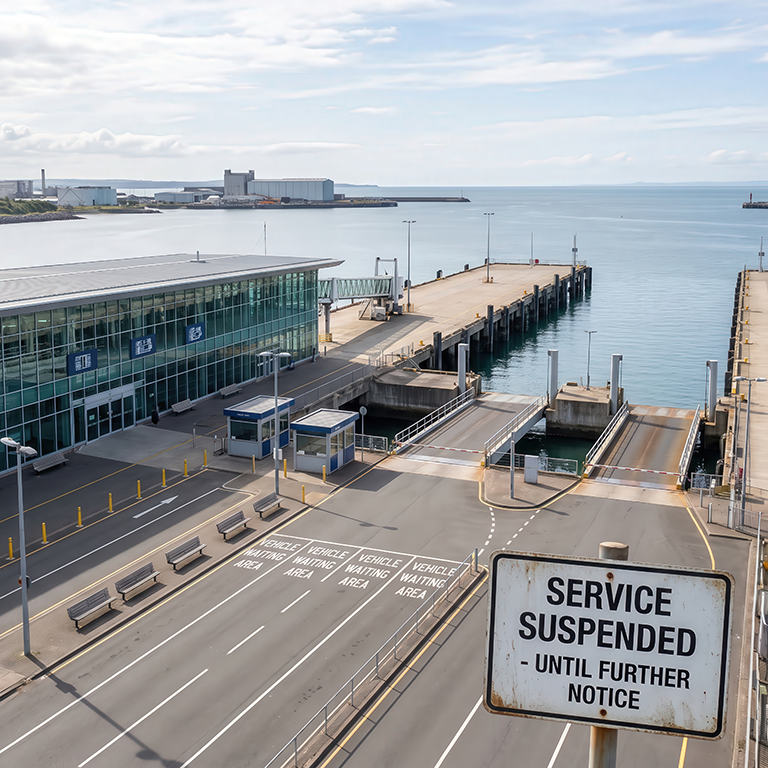
According to the union, no ships will be handled by members in the port between 11.15 and 19.00. ‘This means that loading, unloading, securing, towing and checking cargo could be subject to significant delays,’ said a spokesperson for FNV Havens.
Although the port strike will formally last less than eight hours, delays in container shipping often have repercussions for days. Ships wait for a berth, terminals fall behind schedule and the planning of hinterland transport is pushed back. More information on the handling of sea freight can be found on the sea freight page.
Major terminals and lashing companies are taking part in the strike
FNV Havens has members at, amongst others, the Rotterdam terminal operators ECT and APMTII, and at the lashing companies ILS and Matrans. It is precisely these companies that play a key role in container handling at the Port of Rotterdam.
The extent of the impact such action can have became clear last year. During the lashing workers’ strike, a large part of the Port of Rotterdam came to a standstill. Lashing workers secure containers on board ships; without their work, seagoing vessels cannot depart safely.
For companies with shipments currently in progress, it is therefore advisable to take into account, as of now, shifting cut-off times and delayed container release. Read more about container handling.
Industrial action in Amsterdam, Vlissingen and Terneuzen too
The port strike is not limited to Rotterdam. In Amsterdam, Vlissingen and Terneuzen, the FNV Havens membership is smaller, but members there will also be downing tools on 4 September.
In Amsterdam, the union has members at, amongst others, the HES Bulk Terminal Amsterdam and the towage company Svitzer. In Zeeland, the action will affect, amongst others, Vopak’s tank terminal in Vlissingen and Verbrugge Terminals in Vlissingen and Terneuzen.
This means the industrial action will affect not only containers, but also bulk cargo, tank storage and break bulk. Companies operating across multiple Dutch ports would be well advised to review their entire schedule for that week.
Why is FNV Havens on strike?
The port strike is politically motivated. FNV Havens wants the government to reverse the cuts to social security. Several branches of the FNV have already announced industrial action for this reason.
For instance, FNV Streekvervoer and FNV Stadsvervoer, as well as FNV Spoor – which includes employees of DB Cargo – say they will walk out on 9 September. This threatens to cause disruption simultaneously at several points in the logistics chain in early September.
The combination of a port strike on 4 September and a rail strike on 9 September is of particular relevance to shippers. Containers delayed by the first strike may subsequently face further disruption during hinterland transport by rail.
Consequences of the port strike for importers and exporters
For importers and exporters, the port strike primarily means uncertainty regarding arrival and departure times. Ships calling at Rotterdam around 4 September may moor or depart later than scheduled, putting pressure on connections with road transport, inland waterway transport and rail.
Demurrage and detention charges also warrant attention. If containers remain at the terminal for longer or are collected later, additional costs may arise. Clear agreements regarding days off and timely communication with the shipping line and freight forwarder can help minimise this risk.
Companies with time-critical shipments may wish to consider bringing forward their cargo, choosing an alternative route or temporarily switching to air freight. Read more about imports and urgent shipments.
How to prepare for the strike day
Good preparation starts with understanding the situation. Identify which shipments will be passing through the ports of Rotterdam, Amsterdam, Vlissingen or Terneuzen around 4 September and which of these are time-critical. Then discuss with your freight forwarder what alternatives are available.
This might involve bringing forward cut-off times, delivering export containers earlier and allowing extra time for inland transport. Also check whether agreements on Incoterms clearly specify who bears the risk of delay. You can find out more on the Incoterms page.
Up-to-date and reliable information is worth its weight in gold during a port strike. More and more logistics service providers are therefore using digital tools and AI to keep customers informed in real time about delays and alternatives. Anyone wishing to get started with smart digital solutions, AI and online visibility can contact HEF Digital.
TOP is closely monitoring the port strike
TOP is closely monitoring developments surrounding the FNV Havens port strike. As soon as more information becomes available regarding the exact impact on terminals, cut-off times and sailing schedules, we will inform our customers immediately.
Do you have shipments due to pass through Dutch ports around 4 September? Please get in touch in good time so that we can work together to find the best solution in terms of cost, reliability and transit time. You can also read more about requesting quotes and sea freight rates.
…a port strike lasting less than eight hours can have repercussions throughout the logistics chain for days on end? Ships wait for a berth, terminals fall behind schedule and hinterland transport by lorry, train and inland waterway is delayed as a result. A single day of strike action therefore often means an extra week of planning.