



Containers are increasingly being returned to Asia empty
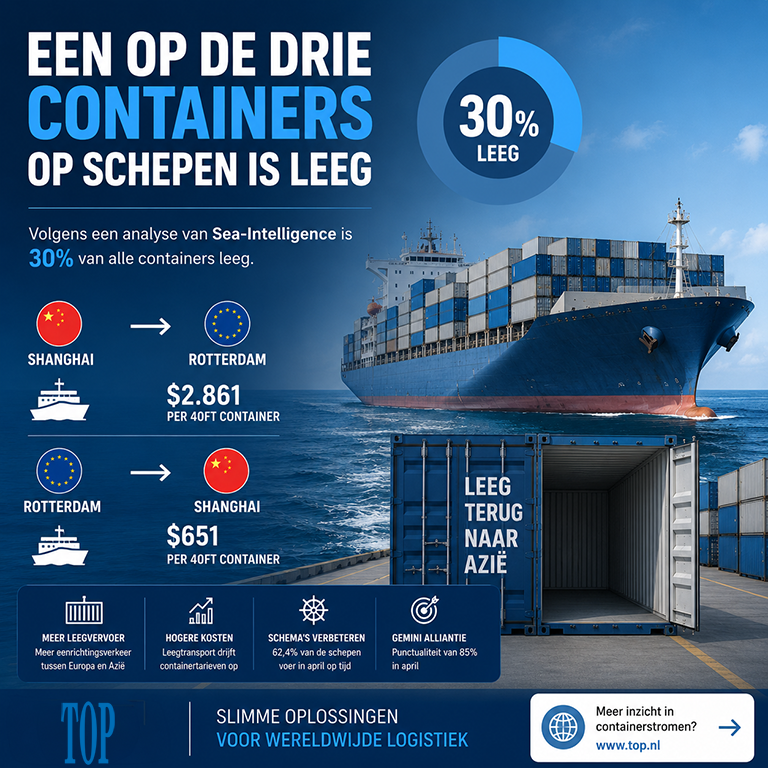
Containers are increasingly being transported empty worldwide. According to a new analysis by the Danish research firm Sea-Intelligence, around 30 per cent of all containers on container ships are now empty. This means that almost one in three containers is being transported by sea without a load.
Before the coronavirus pandemic, that figure stood at around 24 per cent. The increase highlights just how skewed global trade flows have become. A particularly significant imbalance is emerging on routes between Europe and Asia, as many containers leave China full but return empty to Asian exporting countries.
Containers must return to China quickly
According to Sea-Intelligence, container shipping is increasingly focused on the speed of repositioning empty containers. Shipping lines want to return containers as quickly as possible to regions where demand for exports is highest, particularly China and other Asian manufacturing countries.
This is leading to striking price differences between shipping routes. On the Shanghai-Rotterdam route, container rates are currently rising sharply due to the early peak season and high demand for capacity. At the same time, rates on the return route from Rotterdam to Shanghai remain strikingly low.
According to the Drewry World Container Index, a 40-foot container from Shanghai to Rotterdam cost an average of $2,861 last week. Market leader MSC has even announced rates of $6,000 per container from mid-June onwards. On the reverse route from Rotterdam to Shanghai, the rate remained at around $651.
Containers highlight dependence on Asian imports
During the coronavirus pandemic, the flow of goods from Asia to Europe and North America grew explosively. At the same time, a debate arose in Europe about reducing dependence on China. In practice, however, that dependence remains high for the time being.
Even now, the number of containers travelling from Asia to Europe is once again rising sharply. The European Union recently announced measures against the growing flow of Chinese goods, but the ultimate impact of these remains uncertain. China has, meanwhile, already warned of possible countermeasures should Europe take further protectionist steps.
For companies active in international logistics, flexibility therefore remains essential. Further information on container flows and international shipping can be found on the page about container handling and sea freight.
Containers do arrive on time slightly more often
At the same time, Sea-Intelligence has observed a slight improvement in the reliability of sailing schedules. According to the research firm, 62.4 per cent of container ships sailed on time in April. That is the highest level so far this year and better than the same period last year.
During the COVID-19 pandemic, the punctuality of container shipping fell to historically low levels. At the start of 2022, only one in three ships arrived on schedule. The situation has since improved gradually, although geopolitical tensions and disruptions worldwide continue to cause fluctuating performance.
The Gemini alliance between Maersk and Hapag-Lloyd is attempting to further improve reliability through simplified sailing schedules and fewer port calls. According to Sea-Intelligence, Gemini achieved a punctuality rate of 85 per cent in April, although this still fell short of its previously stated ambition of over 90 per cent.
…empty containers represent a major cost for shipping companies, but are also essential for quickly supplying export markets in Asia with sufficient equipment?
Would you like to receive our newsletter?
Stay up to date with container traffic, terminal capacity and developments in inland waterway transport and sea freight. Sign up now: