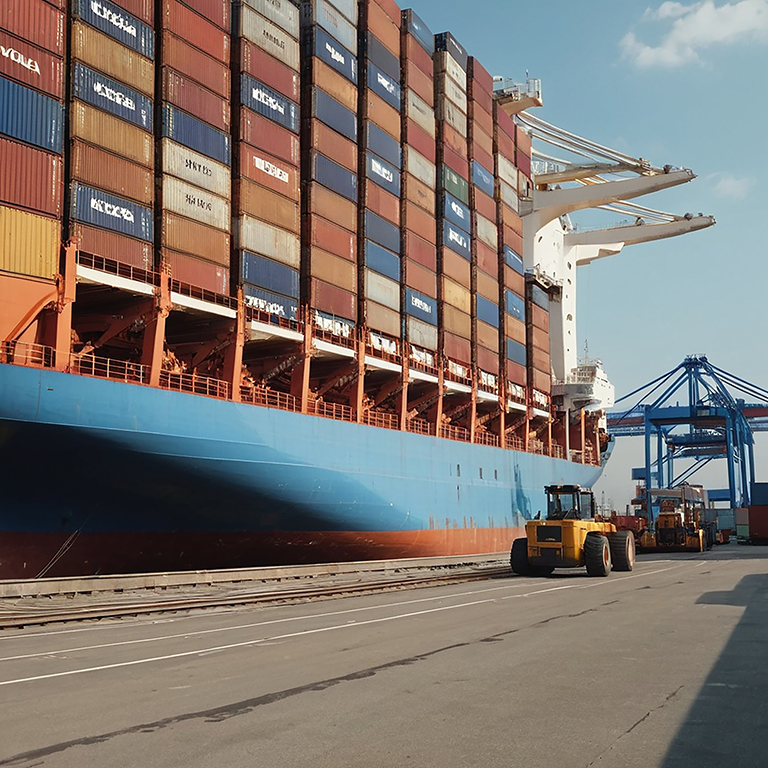




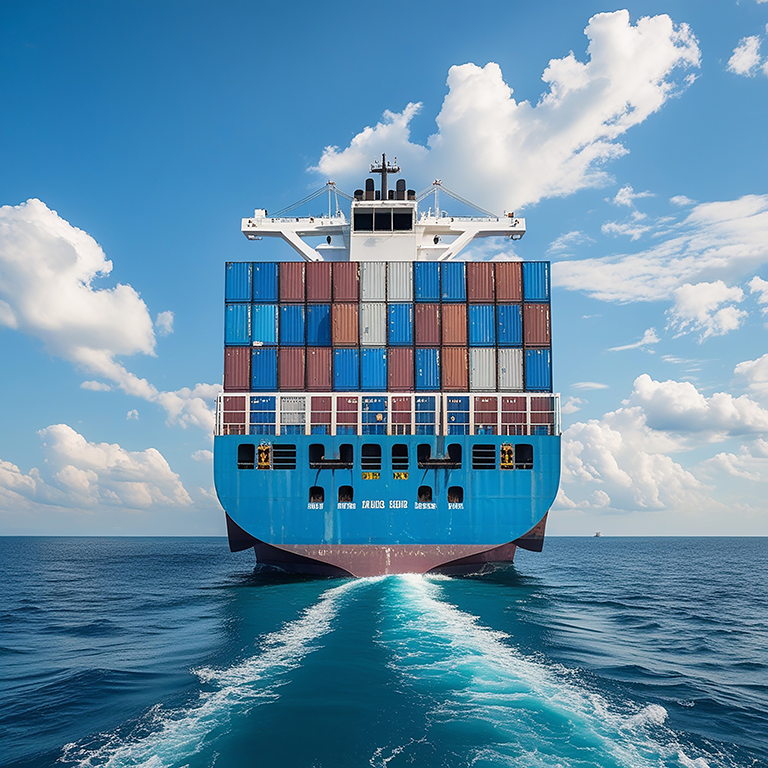
From next month, Maersk will once again be offering a direct service from Antwerp to the Israeli port of Ashdod. The Danish shipping company is thus reinstating a direct connection that was temporarily suspended earlier this year. The transit time is ten days.
This is good news for shippers with cargo bound for Israel. A direct service means a shorter and more reliable transit time, without any additional transhipment en route. The return of this connection also strengthens Antwerp’s position as a port of departure for the eastern Mediterranean.
Direct service to start in early September from Antwerp
The first vessel to carry containers bound for Ashdod from the Port of Antwerp is the ‘Maersk Izmir’, with a capacity of 3,450 TEU. This vessel is expected to arrive at PSA’s North Sea Terminal in Antwerp on 6 September. Departure is scheduled for 7 September, followed by arrival in Ashdod on 17 September.
With a transit time of ten days, Maersk is positioning this direct service as a fast and predictable option for cargo between Northern Europe and Israel. For exporters working to tight delivery schedules or handling perishable and time-sensitive goods, this can make a significant difference.
Anyone planning to ship cargo to the eastern Mediterranean region would be well advised to secure space and rates in good time. Further information on current market developments can be found on the sea freight rates page.
SLB North Sea Service connects Northern Europe with the Eastmed
The ‘Maersk Izmir’, together with four other vessels ranging from 3,003 to 3,596 TEU, operates on the SLB North Sea Service. In Northern Europe, this liner service calls successively at Tilbury, Rotterdam, Bremerhaven and Antwerp to load cargo for destinations in Israel and Egypt.
Within the new rotation, Ashdod will be the first port of discharge in the eastern Mediterranean. The vessels then sail on to the Egyptian ports of Alexandria, Damietta and Port Said, before returning to Tilbury.
For Dutch and Belgian shippers, the combination of Rotterdam and Antwerp in the same rotation is of particular interest. It offers flexibility in choosing the port of departure and helps to spread the risk should either port experience congestion. Read more about sea freight.
Temporary diversion via Haifa comes to an end
The SLB North Sea Service has called at Ashdod in the past. However, in February this year, Maersk decided to temporarily replace Ashdod with Haifa. That temporary arrangement will therefore come to an end next month.
It has become increasingly common in recent years for shipping lines to temporarily remove or replace ports from their rotations. Geopolitical tensions, security considerations and operational disruptions are forcing carriers to constantly adapt their networks. The return of Ashdod to the regular rotation indicates that Maersk once again has sufficient confidence in stable handling operations.
For shippers, this underlines how important it is to keep a close eye on route changes. A change in the port of discharge can affect transit times, onward transport in the country of destination and total transport costs.
ONE and Hapag-Lloyd are also benefiting from the rotation change
The rotation change does not only affect Maersk itself. Ocean Network Express (ONE) and Hapag-Lloyd also charter space on the SLB North Sea Service and market this service under their own brand names, LEX and EME respectively.
For the market, this means that the resumed direct service to Ashdod will be bookable via several shipping lines. Shippers can therefore compare rates and terms and conditions from different providers, whilst the cargo is actually carried on the same vessels.
It is precisely with this type of shared service that it pays to compare quotes carefully. When doing so, look not only at the base rate, but also at surcharges, validity periods and the terms and conditions of each shipping line. Want to know more? Visit the request a quote page.
MSC and ZIM as the main competitors on the route
Maersk faces stiff competition from MSC and ZIM on the route between Antwerp and Ashdod. This duo operates a joint service with five vessels ranging from 6,078 to 9,403 TEU.
The MSC and ZIM rotation includes London Gateway, Rotterdam, Hamburg, Antwerp and Le Havre in Northern Europe, followed by Ashdod, Haifa and Damietta in the eastern Mediterranean. With considerably larger vessels, they offer more capacity per sailing than Maersk’s SLB North Sea Service.
This competition is beneficial for shippers. Having multiple providers on the same route generally means more competitive rates, more sailing options and a stronger negotiating position. Those who regularly ship to Israel or Egypt can compare the services in terms of frequency, transit time and reliability.
What does the direct service mean for importers and exporters?
The resumed direct service to Ashdod makes the connection between the Benelux and Israel faster and simpler. Without transhipment at an intermediate port, not only is transit time reduced, but so too is the risk of delays and damage. This is particularly relevant for companies operating with fixed delivery schedules or seasonal goods.
At the same time, thorough preparation remains essential. This includes booking space in good time, checking cut-off times at the terminal and making clear agreements on delivery terms. Documentation for shipments to Israel and Egypt also warrants extra attention. Read more about Incoterms, importing and container handling.
TOP is closely monitoring developments concerning Maersk, sailing schedules and sea freight rates. The logistics sector is also rapidly digitising: from online booking platforms to AI-driven planning. Companies wishing to boost their own digital visibility and online discoverability can turn to specialists such as HEF Digital, experts in AI, SEO and web development.
…a direct service without transhipment at an intermediate port not only saves days in transit time, but also significantly reduces the risk of delays, damage and additional costs? That is why shippers with time-sensitive cargo almost always opt for a direct connection whenever it is available.