



The Port of Los Angeles is preparing for a 5 per cent increase in container volume over the next six to eight months. Ongoing unrest in the Red Sea and new draught restrictions in the Panama Canal are diverting more cargo towards the US west coast.
Director Gene Seroka announced the forecast during a press briefing on the port’s July figures. He stated that the growth is not a guarantee, but the port is making preparations in consultation with hauliers, terminal operators, shipping lines and the port workers’ union, the ILWU.
How much growth does the Port of Los Angeles expect? Approximately 5 per cent more container volume year-on-year over the next six to eight months.
Why? Shipping lines are partly avoiding the Red Sea, and the Panama Canal is facing draught restrictions; routes via the west coast reduce transit times and costs.
How busy was it in July? 960,464 TEU: the second-busiest July on record, 6% lower than last year but 7.5% above the five-year average.
Port of Los Angeles prepares with supply chain partners
The Port of Los Angeles is holding talks with the Harbor Trucking Association, terminal operators, shipping lines and the International Longshore and Warehouse Union to ensure it can handle additional volumes smoothly. In doing so, the port aims to prevent a sudden surge from leading to congestion, waiting times and rising costs for shippers.
According to Seroka, ongoing concerns regarding the Suez Canal and the Panama Canal mean that more cargo will flow through the west coast ports, particularly to Southern California. He believes that alternative routes via the west coast can not only shorten transit times but also reduce shipping costs.
This is relevant for European importers and exporters: shifts in global cargo flows have an impact on capacity, rates and transit times across virtually all shipping routes. Up-to-date market information can be found on the sea freight rates page.
Red Sea and Panama Canal divert cargo to the west coast
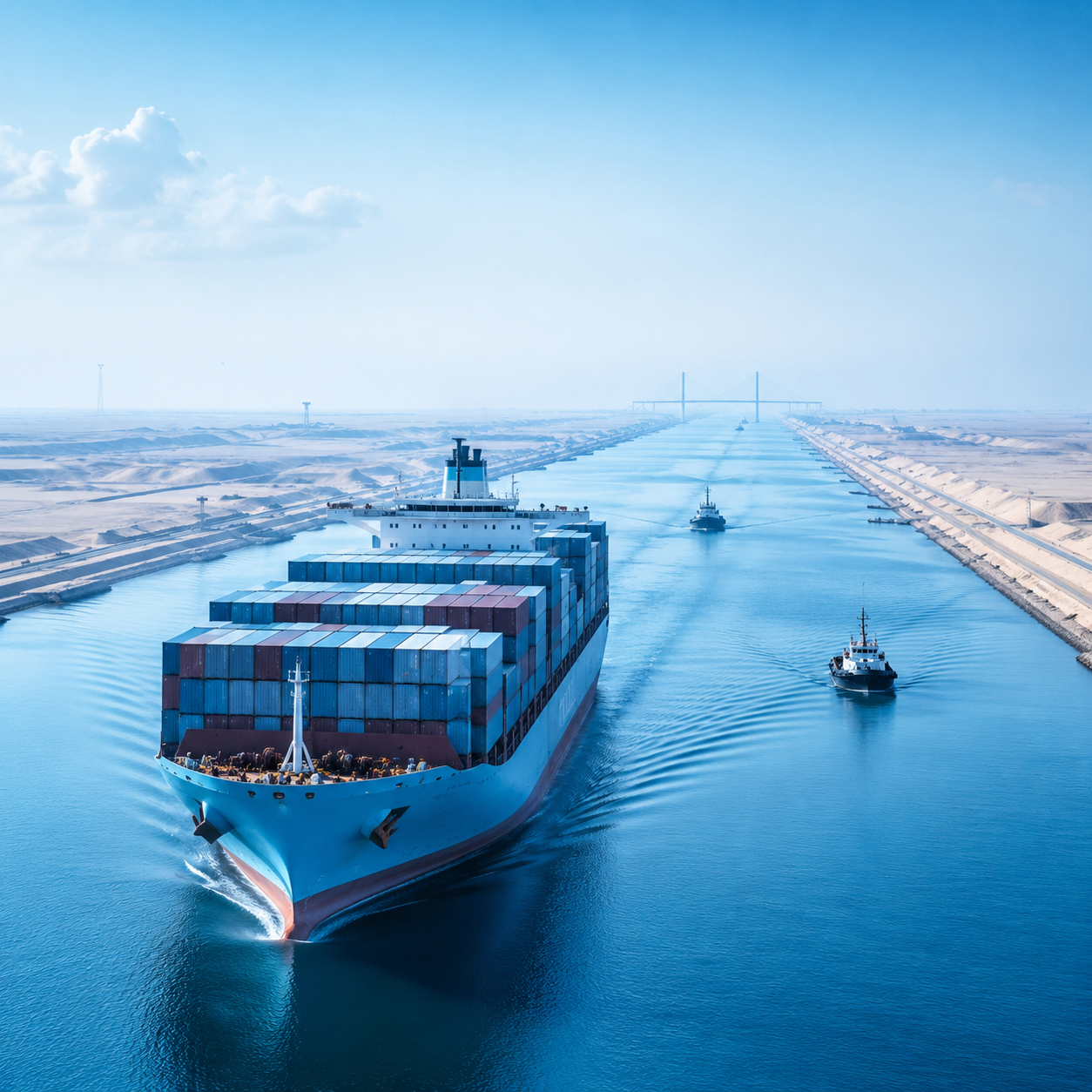
Major shipping lines have been avoiding the Suez Canal for some time now due to attacks on merchant vessels in the Red Sea. Some carriers are cautiously returning: Maersk reported in July that one of its vessels had successfully transited the Red Sea again. However, there is as yet no sign of a full recovery of the route.
At the same time, the Panama Canal announced a series of draught restrictions for the summer period. The canal is thus taking preventative measures to avoid a repeat of the 2023 drought. The next restriction comes into force at the start of September and will mainly affect large container ships, which will be able to carry less cargo or will have to take a detour.
The combination of these two bottlenecks is making routes via the US west coast more attractive. Cargo is unloaded there and transported further inland by rail or lorry. Read more about sea freight and importing.
Early peak due to front-loading and falling rates
The port has already seen higher volumes in recent months as shippers brought forward their shipments. Many importers saw May, June and July as a window of opportunity to get goods onto the market more quickly, before the expiry on 24 July of the temporary tariffs under Section 122 of the Trade Act of 1974.
That general 10 per cent import duty, introduced earlier this year by President Trump, expired last month. The result was an early peak in the peak season: cargo that normally arrives in August and September has, in part, already arrived.
Seroka expects another strong August, although he notes that some of the seasonal cargo has therefore already been shipped. For shippers, this underlines just how strongly trade policy and stock-keeping behaviour determine the timing of cargo flows.
July figures: second-busiest July on record
The Port of Los Angeles handled 960,464 TEU in July. This makes it the second-busiest July in the port’s history. Compared with the same month last year, volumes fell by 6 per cent, but compared with the five-year average for July, volumes were 7.5 per cent higher.
| Category | Volume (TEU) | Change compared to last year |
|---|---|---|
| Total handled | 960,464 | -6% |
| Loaded imports | 499,552 | -8% |
| Loaded exports | 111,776 | -8% |
| Empty containers | 349,137 | -2 |
Source and methodology: monthly figures from the Port of Los Angeles (press briefing by Gene Seroka). Volumes in TEU (twenty-foot equivalent units); year-on-year comparison with the same month last year, supplemented by the five-year average for July. Context regarding the Red Sea and the Panama Canal based on reports from Supply Chain Dive and Maersk.
Implications for importers and exporters
Shifting cargo flows towards the US west coast are having an impact on capacity and rates on trans-Pacific routes, and indirectly on services to and from Europe. When shipping lines redeploy vessels across different trade lanes, this can lead to capacity shortages, surcharges or changes to sailing schedules.
For companies shipping containers, it pays to plan ahead: request rates in good time, compare alternative routes and allow for longer transit times or surcharges for detours. Clear agreements on Incoterms, cut-off times and documentation also help to avoid surprises.
TOP is closely monitoring developments concerning the Port of Los Angeles, the Panama Canal, the Red Sea and the global container market. Read more about requesting rates, Incoterms and container handling.
The fact that ports and logistics chains are increasingly relying on up-to-date data shows just how important digital visibility and smart data applications have become, including for logistics service providers themselves. Want to know more about AI, SEO, marketing and web development? Then take a look at HEF Digital.
…the Panama Canal relies on fresh water from Lake Gatún? During droughts, such as in 2023, the canal has to restrict its maximum draught. Large container ships are then unable to carry as much cargo or are forced to choose an alternative route.