



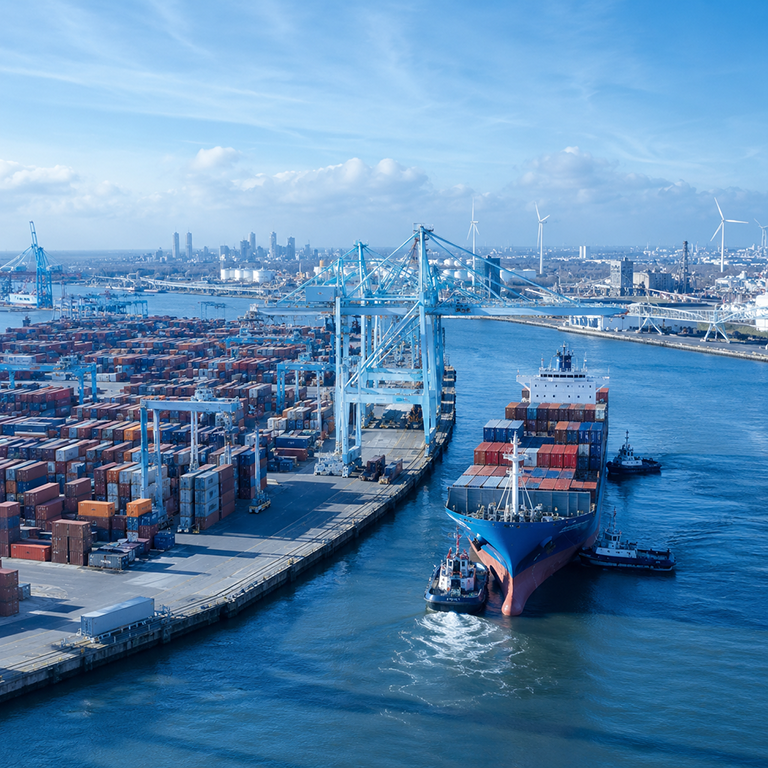
The Port of Rotterdam is preparing for the possible reopening of the Strait of Hormuz. Companies in the Rotterdam port area do not expect an immediate flood of cargo, but offices of shipping lines and freight forwarders could quickly become busier once shipping resumes.
Tom Demolder, head of Hapag-Lloyd’s Rotterdam office, is discussing the possible reopening and its consequences with the company’s headquarters in Hamburg. The shipping line has four container vessels that have been stuck in the Persian Gulf for months. Despite the preliminary agreement between the United States and Iran, shipping lines remain cautious.
Port of Rotterdam expects cautious restart
According to Demolder, there are no concrete plans yet for regular sailings between the Netherlands and the Persian Gulf. Even if the Strait of Hormuz is formally open, it may still take time before vessels can sail safely. Sea mines may still be present in the area and risks for crews remain significant.
Once the route is declared safe, the Port of Rotterdam does expect additional pressure. Much cargo has been standing still for months and customers will want to replenish their stocks. According to Demolder, this means a rush is expected, especially in planning and customer communication.
Port of Rotterdam sees limited container impact
The overall impact on container traffic in the Port of Rotterdam appears limited. Around 4.4 per cent of all goods handled in Rotterdam normally have a destination in, or come from, countries around the Persian Gulf. This mainly concerns crude oil, kerosene, fuel oil, gas oil and diesel.
Container traffic with the region accounts for around one per cent of Rotterdam’s total container volume. Part of this flow continued in recent months via alternative routes, for example to ports before the closed Strait of Hormuz, after which goods were transported onward by truck.
Further information on international cargo flows can be found on the pages about sea freight, container handling and road transport.
Port of Rotterdam remains cautious
Jean-Paul van Munster, director of Trans Ocean Pacific Forwarding and board member of Fenex, remains cautious. According to him, the agreement between Iran and the United States is brief and still uncertain. Previous ceasefires did not hold, so practice will have to show whether shipping can really resume safely.
If the agreement does hold, Van Munster expects extra pressure in ports in the Middle East. Within two months, a lot of cargo will have to move into and out of the region. That may cause congestion and could affect sea freight costs, especially if Iran still charges costs for passage or services.
...the Strait of Hormuz is one of the world’s most important maritime chokepoints? A reopening may bring relief, but can also temporarily cause pressure, replanning and congestion.
Related news

Would you like to receive our newsletter?
Stay informed about container congestion, terminal capacity and developments in inland shipping and ocean freight. Sign up now: